Power Up - Upskill Yourself...

Reading view

Explore Dataverse Tools: FetchXML Formatter Online by Arun Potti

Logo of Dataverse featuring a green circular design with the text 'Dataverse' in a modern font.

Working with FetchXML can sometimes get messy – especially when dealing with long, nested queries. To make this easier, I’ve created a new Online FetchXML Formatter. This tool automatically beautifies and structures your FetchXML, making it more readable and developer‑friendly.

This is a lightweight web tool for Dataverse / Dynamics 365 CE developers. It helps them format FetchXML and instantly generate ready-to-use JavaScript, C#, and Web API snippets. All of this is possible from a single FetchXML input.

Click on the below link to open the Tool.

Arun Potti’s FetchXML Formatter

Features:

Clear separation between input and the three outputs.

🔹 Single FetchXML input

Paste FetchXML in standard XRM / Dataverse format

Basic XML validation (parse + root <fetch> check)

🔹 Automatic formatting

Auto-beautifies FetchXML on input/change

Fixes indentation and line breaks for readability

🔹 Code generation

JavaScript snippet for Xrm.WebApi.retrieveMultipleRecords or Web API calls

C# verbatim string snippet for plugins, custom workflow activities, or console apps

Web API URL parameter (fetchXml) with URL-encoded FetchXML

🔹 Copy to clipboard

One-click Copy for:

  • JavaScript output
  • C# output
  • Web API output
  • Formatted FetchXML

🔹 Sample FetchXML

Insert a sample FetchXML query with one click to test the tool

🔹 Clean, responsive UI

Modern layout that works on desktop and mobile

In the next post, I’ll walk you through what the tool does. I will explain how it works.

Please like and share your valuable feedback on this article. Also, follow my blog to get my articles to your Inbox.

Graphic promoting a YouTube channel with the text 'Has my blog post helped you?' and buttons for 'WATCH', 'LEARN', and 'SUBSCRIBE'.

Below are my earlier articles that you can have a look.

My first XRMToolBox Plugin: Dataverse Users, Security roles, Teams and Teams security roles

My first XRMToolBox Plugin: Dataverse Users, Security roles, Teams and Teams security roles (Usage)

My first XRMToolBox Plugin: Dataverse Users, Security roles, Teams and Teams security roles (Installation)

My first XRMToolBox Plugin: Dataverse Users, Security roles, Teams and Teams security roles (Overview)

Limited Time Offer: 50% Off Microsoft Certification Vouchers

How to send an automated email in Dataverse using Power Automate?

Understanding Activity Party Types in Dynamics 365 CE

How to configure donotreply email using Shared mailboxes in Dynamics 365 CE?

Microsoft Power Pages: The authentication key for your portal will expire

Microsoft Azure: You’re not eligible for an Azure free account

How to create Microsoft Azure 30 days trial?

Edit in Visual Studio Code for the Web in Power Apps Portals

Error: The object cannot be updated because it is read-only in Microsoft Power Apps

Resolved: Fix connections issue in Power Automate Flow

Clear all objects feature in Power Apps Solutions

Power Automate Error: The ‘inputs.parameters’ of workflow operation of type ‘OpenApiConnection’ is not valid.

Power Automate Error: To use FilteringAttributes, your trigger must include an Update event on Dataverse Trigger

Dynamics 365 CE Solution Import Failed in Azure DevOps Pipelines

Power Automate Error: Cannot write more bytes to the buffer than the configured maximum buffer size: 104857600

Error while opening a Tool in XRMToolBox

The Power Automate Cloud Flows Best Practices Whitepaper is now LIVE!

Error in Power Automate: There’s a problem that needs to be fixed to trigger this flow. To see more details, open Flow checker.

How to get the Dataverse Table’s first row from List Rows in Power Automate?

Microsoft Dataverse Accelerator – Part 2 – Installation

Microsoft Dataverse Accelerator – Part 1 – Introduction

How to get the Database Version of the Dataverse?

API playground feature not available in Dataverse Accelerator App?

How to Explore and test Dataverse in the Web API playground (preview)?

Web resource method does not exist in Dynamics 365 CE

How to get Environment Variable Value in Dynamics 365 CE using JavaScript?

Model-driven Apps – openAlertDialog – JavaScript – Code Snippet

Power Automate – Flow is not running on Trigger condition

Power Automate – Input field Delete option is disabled

Recipient of type ‘Contact’ with ID is marked as non-emailable

Preferred Solution | New feature | Microsoft Dataverse

New and Retired Microsoft Dynamics 365 Certifications

Environment settings behavior (Preview) feature in Model-driven Apps

Error while connecting to Dataverse environment in XrmToolBox

Power Fx Formula Columns in Microsoft Power Apps

How to Enable 2024 Release Wave 1 Updates in the Microsoft Dynamics 365 CE Environment?

Delete and Restore records (Preview) feature in Microsoft Dataverse

Microsoft Power App Environments Retention Period

How to Override the Model-driven app header colors?

Timeline Highlights (New feature) in Microsoft Power Apps

Model-driven App – Cannot “See associate records” option in the sub grid (arunpotti.com)

Bookmark the Important Dynamics 365 URLs

How to Enable Tenant-level analytics for Power Automate and Power Apps?

Microsoft Power Automate Copy and Paste Action in New DesignerHow to Setup Multi-Factor Authentication for your Microsoft Power Apps environment?

Microsoft Power Apps | Modern Themes | Preview feature

How to Download and Install the .NET Framework?

How to Create a SharePoint Site Online?

How to add and use Copilot answer control (Preview) in Microsoft Power Apps?

Dark Mode in Microsoft Power Apps

How to create Microsoft 365 E3 Trial for 30 days?

Refreshed look of solution dependencies in Dataverse Solutions

Microsoft Power Automate | Version History | Restore | New Feature

MICROSOFT LEARN – Artificial Intelligence Skills Challenge​ 2024!!!

Resolved – ‘InvokerConnectionOverrideFailed’ Error When a Power App Custom Page call a Power Automate Flow

How to Create Microsoft Power Apps Trial 30 days?

Not able to Create Power Automate Flow in Custom Page in Model-Driven App?

How to Enable Inline Actions feature in Microsoft Canvas Apps?

How to use /mention in Outlook web client for Dataverse records?

Associate Activities Multiple Related Records (Preview) feature in Microsoft Dynamics 365 CE

How to Enable Aggregation (preview) feature in Microsoft Power Apps?

Power Apps – Some components of this app require you to sign in. If you don’t sign in, part of the app may not work.

How to Enable the SQL Server stored procedures (preview) feature in the Power Apps?

How to get the Client Version of the Model Driven Apps?

How to get Microsoft 365 E3 Trial for 30 days?

How to Enable Copilot for Model-Driven apps feature in Dynamics 365 CE Environment?

[Resolved] Web resource method does not exist in Dynamics 365 CE JavaScript Error

How to Enable Blocking unmanaged customizations (Preview) feature in Dynamics 365 CE?

How to create Microsoft Power Apps Developer Plan Environment?

Microsoft Power Apps Developer Plan vs Power Apps Trial 30 days

What is Microsoft Power Apps Developer Plan?

[Resolved] PCF Field Control not showing anything in the PCF Test Environment?

[Issue Resolved] ReferenceError: Web resource method does not exist in Dynamics 365 CE Javascript Error

[Issue Resolved] Subcomponent cannot be added to the solution because the root component Template is missing in Dataverse

How to Turn Off the Modern Look in the Model Driven Apps?

How to Turn on the New modern, refreshed look for the Model-Driven apps?

Microsoft Power Apps – Apps filter feature

How to Create Microsoft Power Apps 30 days Online Trial Version and an Environment?

Microsoft Power Apps – Solutions filter Preview feature

How to Show the Power Automate complete Expressions?

Dataverse Error: Cannot start the requested operation [EntityCustomization] because there is another [PublishAll] running at this moment.

Power Automate Error: You should specify a contact or account.

How to get the Choice Text and Value in the Dataverse using JavaScript?

Microsoft Dataverse Low Code No Code Plugins

How to convert the Number String to Number Array?

How to Integrate Instant Plugins in the Power Automate Flow?

Power Apps – ‘actionname’ is an unknown or unsupported function in namespace ‘Environment’

Dataverse Browser V1.1.0.1 is available for Dataverse Plugin Debugging

How to Integrate Instant Plugins in the Canvas App?

How to Enable Access to Microsoft Dataverse Actions (Preview feature) in the Power Apps?

How to Create an Instant Plugin in the Dataverse Environment?

How to Install the Microsoft Dataverse Accelerator in the Dataverse Environment?

What is Microsoft Dataverse Accelerator?

How to get the Logged in User Information in the Power Apps?

How to Install Power Platform Tools in Visual Studio Code?

How to Install the Apps from the Microsoft AppSource to your Dataverse Environment?

Microsoft Power Apps Maker Portal has a new look

Microsoft Power Apps Emulator (New Feature)

How to Enable the Dataverse Offline (Experimental Feature) in the Canvas Apps?

How to set the Authoring Version in the Canvas App?

New version of Dataverse Browser is available for Dataverse Plugin Debugging

Latest Free Practice Assessments for Microsoft Certifications

Download CRM 365 V9.X Tools using PowerShell

How to set the Refresh cadence for a Power Platform Environment?

Update forms and views (Preview feature) in Dataverse

How to connect to Microsoft Dataverse in Power Automate Flow using Service principal?

How to Enable Copilot (Preview) feature in Canvas Apps?

How to Debug a Dataverse Plugin without Installing the Profiler in the Plugin Registration Tool?

How to Enable the Licenses (Preview) feature for a Power Platform Environment?

How to Enable Maker Welcome Content (preview) in Power Apps Maker Portal?

How to Enable Managed Environments for a Dataverse Environment?

How to Enable the Modern Controls (Preview feature) in the Canvas Apps?

How to Enable 2023 Release Wave 1 updates in the Dataverse Environment?

How to Deploy Enterprise Applications in the new Dataverse Environment?

What is Preview, Experimental and Retired features in Canvas Apps?

How to Enable the New Power Fx Formula Bar in Power Apps Studio?

Writing Power Fx formulas with natural language

Power Fx Formula Columns in Dataverse

Generating Power Fx formulas from examples

How to Create Dynamics 365 Marketing 30 Days Trial Version Online?

How to disable Multi-Factor Authentication (MFA) on Dynamics 365 Login?

How to Create Microsoft Power Apps 30 days Online Trial Version and an Environment?
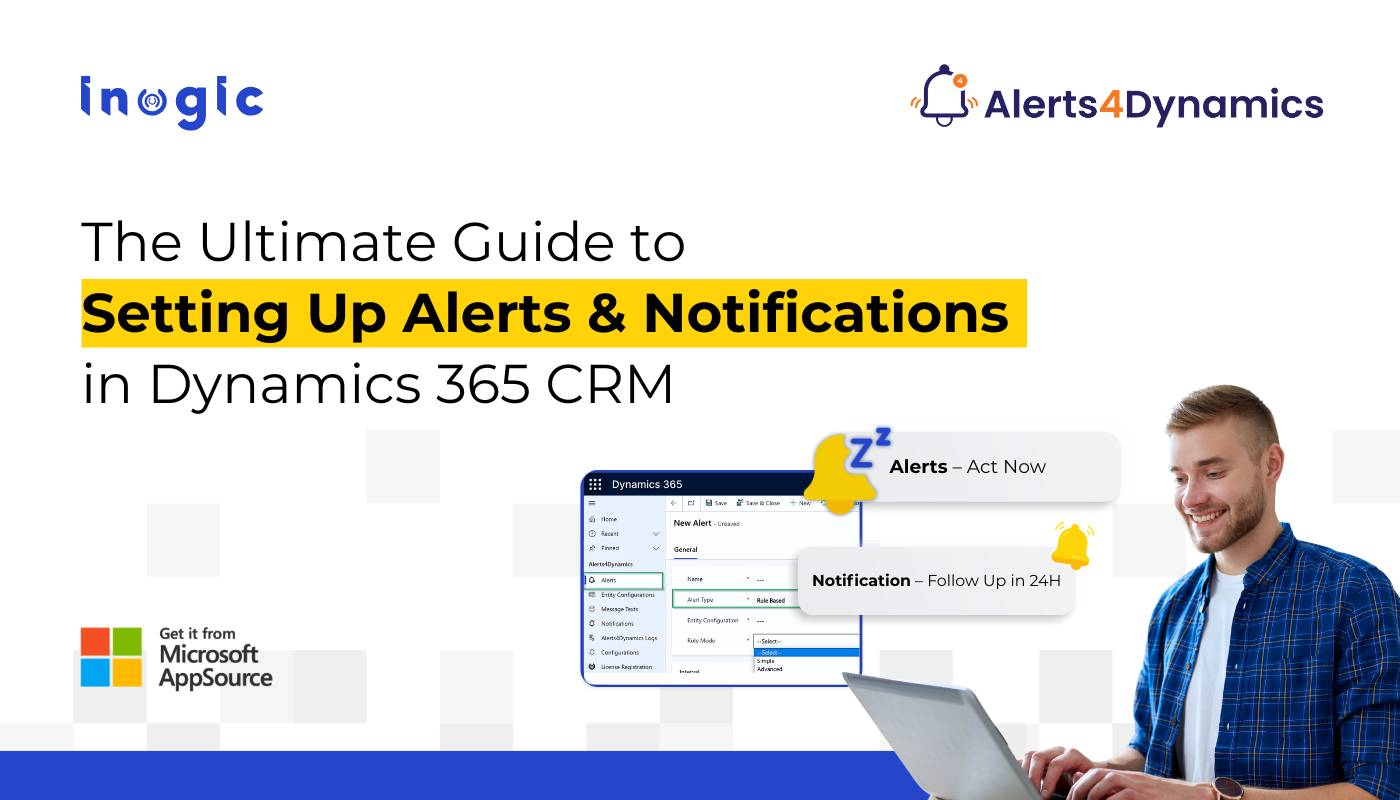
The Ultimate Guide to Setting Up Alerts & Notifications in Dynamics 365 CRM


Alerts & Notifications in Dynamics 365 CRM

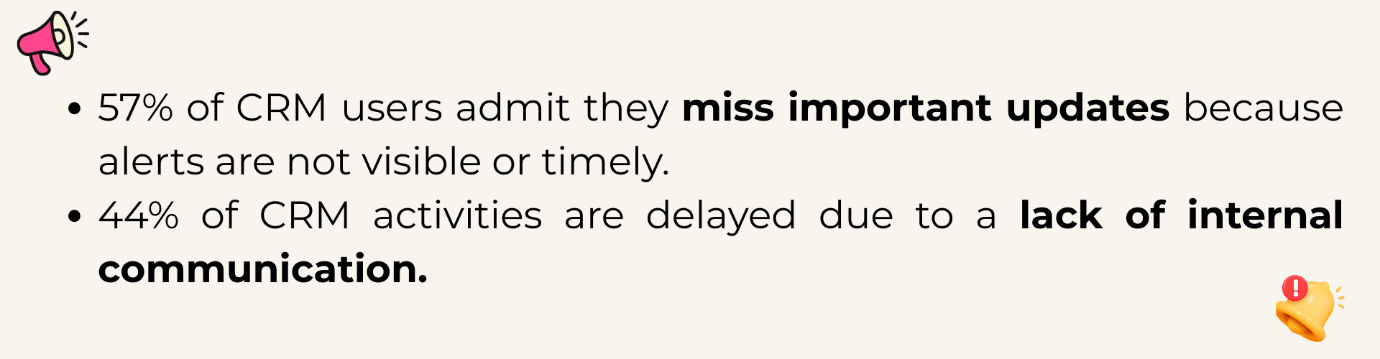
In many businesses, important updates in Dynamics 365 CRM go unnoticed. One delayed update can cost a deal, damage customer trust, or slow down decision-making. Sales teams miss important lead updates, service teams fail to act on escalations, and marketing teams lose track of campaign responses.

Common Challenges Teams Face with Alerts in CRM

  • No real-time alerts inside CRM → missed updates
  • Too many emails → ignored or overlooked
  • No way to alert users based on record changes
  • No support for rich-text messages or multilingual teams
  • Managers do not get notified when targets, deadlines, or SLAs are at risk

Alerts & Notifications in Dynamics 365 CRM

This is exactly why automated alerting is no longer optional; it’s essential.

The Solution: Alerts4Dynamics – The Complete Alert Engine for Dynamics 365 CRM

Dynamics 365 CRM doesn’t offer robust in-app alerts by default.

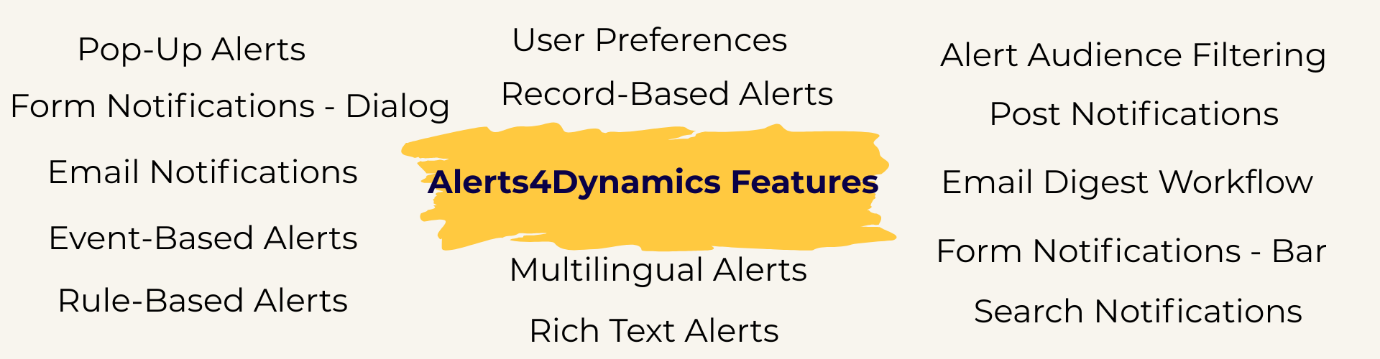
Alerts4Dynamics fills this gap perfectly by supporting pop-ups, form notifications, email alerts, rich text notifications, multilingual content, user preferences, and much more.

Before we dive into the configuration tutorial, let’s explore the key features with practical examples.

Type of Alerts in CRM (With Real Business Examples)

1️. Pop-Up Alerts

Instant notifications that appear in the alerts panel (Bell icon).

Example:

A new lead is created from the website, and the assigned sales rep receives a pop-up alert instantly.

2️. Form Notifications – Dialog

A pop-up box opens automatically when the user enters a record form.

Example:

When entering an Account record with unpaid invoices, users see a dialog warning:

“This customer has 3 overdue invoices. Please review before proceeding.”

Helps service agents make informed decisions instantly.

3️. Form Notifications – Bar

A banner-style alert displayed at the top of record forms.

Example:

A quote nearing expiry shows a yellow bar:

“Quote expires in 3 days. Please follow up with the customer.”

Reduces lost revenue from expired quotes.

4️. Email Notifications

Send alerts directly to internal users or external contacts.

Example:

When an invoice is marked as “Paid,” an email goes to all contacts related to that Account, notifying them about payment confirmation.

Speeds up customer communication without manual emails.

5️. Event-Based Alerts

Trigger alerts when a record is created, updated, or changes status.

Example:

When a case is escalated:

  • The assigned agent gets a pop-up
  • The supervisor gets an email
  • The account manager gets a dialog alert

Ensures immediate action across all departments.

6️. Rule-Based Alerts

Trigger alerts using system views or FetchXML conditions.

Example:

Send alerts for:

  • Opportunities over $50,000
  • Invoices with amount ≥ $1000
  • Accounts without recent interactions

Perfect for automated monitoring of high-impact data.

7️. Record-Based Alerts

Alerts created for individual records.

Example:

A specific quote is expiring in 48 hours → alert only on that record.

Great for one-time reminders.

CRM

Alerts & Notifications in Dynamics 365 CRM

8️. Multilingual Alerts

Display alerts in user’s preferred CRM language.

Example:

English user sees:
“Invoice is overdue.”

French user sees:
“Facture en retard.”

Ideal for global companies.

9️. Rich Text Alerts (Images, Links, Colors, Formatting)

Create visually engaging messages.

Example:

A marketing alert with:

  • Bold text
  • Hyperlink to campaign page
  • Embedded image

Boosts clarity and engagement.

10. User Preferences

Let users choose how they want alerts delivered:

  • Pop-up
  • Email
  • Both
  • Or none

Example:

Sales reps prefer email, service agents prefer pop-ups → Alerts4Dynamics adapts accordingly.

Prevents alert fatigue.

11. Alert Audience Filtering

Show alerts only to selected users, teams, or roles.

Example:

A finance alert is visible only to the finance team, not sales.

Enhances data confidentiality.

12. Post Notifications (Tag Users Like Social Media)

Tag users in Timeline → they receive notifications automatically.

Example:

Support agent tags a sales rep:
“@Bob, please contact this customer regarding renewal.”

13. Email Digest Workflow (Daily/Weekly/Monthly)

Send a summary of unread or active alerts.

Example:

Managers receive a daily digest of:

  • Pending approvals
  • Escalated cases
  • Missed follow-ups

Replaces manual reporting.

1️4. Search Notifications

Quickly find alerts using keywords.

Example:

Sales manager searches “Invoice” to view all invoice-related notifications.

Saves time for high-volume CRM users.

Video Tutorial:

6 Real-Time Alerts Every Sales Team Must Set Up in Dynamics 365 CRM

Step-by-Step Guide: Create an Alert Notification in Dynamics 365 CRM

Step 1 – Open Alerts4Dynamics

Advanced Settings → Alerts4Dynamics → Alerts → New

Step 2 – Choose Alert Type

Record-Based, Rule-Based, or Event-Based

Step 3 – Add Message Text or Rich Text

Add colors, images, links, or formatted text.

Step 4 – Select Delivery Mode

Pop-up, form bar, form dialog, email, or user preference.

Step 5 – Assign Alert Levels

Information, Warning, Critical

Step 6 – Choose Audience

User, team, BU, related records, or entire org.

Step 7 – Activate

Alert becomes live instantly.

Practical Use Cases Across Departments

Sales Use Cases

  • New lead alerts
  • Opportunity stage change alerts
  • Quote expiry warnings
  • High-value deal alerts
  • Renewal reminders

Service Use Cases

  • Case creation alerts
  • SLA breach warnings
  • Escalation notifications
  • Customer dissatisfaction alerts

Marketing Use Cases

  • Event registration alerts
  • Form submission notifications
  • Campaign milestone reminders

Challenges Solved by Alerts4Dynamics

Challenge Impact Solution
Missed data updates Slow response Real-time pop-ups + dialogs
Too many emails Alerts ignored User preference control
No workflow visibility Delayed action Event-based triggers
No multilingual support Miscommunication Multi-language alerts
Poor engagement Alerts overlooked Rich-text notifications

FAQs

1. What are CRM alert notifications?

CRM alert notifications are automated messages that inform users about important updates such as new leads, escalations, deadlines, or record changes. While most CRMs offer basic notifications, tools like Alerts4Dynamics provide advanced real-time pop-ups, form alerts, email alerts, and rich-text messages that ensure nothing gets missed.

2. Why do businesses need alerts in a CRM system?

Alerts help teams respond quickly, reduce missed follow-ups, and stay updated without manually checking every record. A solution like Alerts4Dynamics adds smart, automated alerting to Dynamics 365 CRM, helping sales, service, and marketing teams act instantly.

3. What types of alerts can a CRM send?

CRMs typically support email alerts, reminders, and workflow-based notifications. With Alerts4Dynamics, users can go beyond the basics and send real-time pop-ups, form dialogs, form banners, multilingual alerts, rich-text notifications, audience-filtered alerts, and event-based triggers.

4. How do CRM alerts work?

Alerts trigger based on actions like new record creation, updates, or approaching deadlines. In Dynamics 365 CRM, Alerts4Dynamics makes this easier by allowing no-code configuration of event-based and rule-based alerts that fire instantly when something important happens.

5. Can CRM alerts be customized?

Yes. CRMs allow some customization, but Alerts4Dynamics offers deeper flexibility, colored messages, bold text, images, links, icons, and structured formatting. You can also choose levels like Information, Warning, or Critical.

6. Can I choose who receives CRM alerts?

Absolutely. With Alerts4Dynamics, you can target users, teams, roles, business units, or even related record owners. This ensures alerts reach only the right audience while keeping sensitive information restricted.

7. How do CRM alerts help sales teams?

Sales reps get immediate notifications about new leads, stage changes, high-value deals, and expiring quotes. Alerts4Dynamics helps increase conversions by ensuring reps never miss a follow-up or time-sensitive opportunity.

8. Can CRM alerts help reduce email overload?

Yes. In-app pop-ups in Alerts4Dynamics reduce email dependency. Users can choose how they want to receive alerts: pop-up only, email only, both, or none, helping prevent alert fatigue.

9. Does CRM alerts support multiple languages?

Some CRMs offer partial translation support. Alerts4Dynamics goes further by auto-displaying alerts in the user’s preferred CRM language, making it ideal for global teams.

Final Thoughts: Make Dynamics 365 CRM Smarter with Alerts4Dynamics

Alert automation transforms how your teams communicate.
With Alerts4Dynamics, you empower your organization to:

  • React faster
  • Communicate smarter
  • Boost productivity
  • Improve customer experience
  • Reduce missed follow-ups
  • Deliver timely updates across roles

This is the missing alert infrastructure that Dynamics 365 CRM always needed.

Try Alerts4Dynamics with a 15-day free trial from our website or Microsoft AppSource alert notifications.

Need a live demo? Contact us at crm@inogic.com.

The post The Ultimate Guide to Setting Up Alerts & Notifications in Dynamics 365 CRM first appeared on Microsoft Dynamics 365 CRM Tips and Tricks.

How to Improve Data Accuracy and Eliminate Duplicates in Dynamics 365 CRM

DeDupeD

Duplicate data might not seem like a big deal until your CRM starts giving mixed signals, your sales reps chase the same lead twice, or your reports stop adding up.

If you’ve ever thought, “Didn’t we already have this contact in Dynamics 365?”

Most Dynamics 365 CRM users face one common and costly challenge: duplicate records.

The Hidden Impact of Duplicate Data in Dynamics 365 CRM

Duplicate data doesn’t just clutter your system, it eats into productivity, trust, and profitability.

Here’s what happens when duplicates pile up:

  • Sales teams waste hours chasing the same prospect twice.
  • Marketing sends duplicate campaigns, hurting your brand image.
  • Service teams can’t track accurate customer histories.
  • Reporting and analytics become unreliable.

Studies show that poor data quality, including duplicates, can cost organizations up to 12% of their annual revenue.

For Dynamics 365 CRM users, the ripple effect is even stronger because clean data powers automation, AI insights, and accurate forecasting.

So, how do you detect duplicate Dynamics 365 records before they cause chaos?

That’s where DeDupeD – The Advanced Data Deduplication add-on for Dynamics 365 CRM steps in.

The Challenge: Detecting Duplicates Isn’t Enough

Many CRM users rely on basic built-in duplicate detection rules. While these can find duplicate Dynamics 365 data, they often fall short:

  • They can’t handle fuzzy or partial matches (like “Jon” vs. “John”).
  • They don’t detect duplicates across entities (like a Lead matching an existing Contact).
  • They can’t automate cleanup at scale.

Some third-party tools help identify duplicates, but they often require external systems, manual intervention, or complex configurations.

DeDupeD, however, redefines the process by bringing intelligent, flexible, and automated duplicate management directly inside Dynamics 365 CRM.

Meet DeDupeD: The Smarter Way to Find, Clean & Merge Duplicate Dynamics 365 Data

Built 100% natively for Dynamics 365 CRM, DeDupeD helps you find, clean, and merge duplicate Dynamics 365 data without exporting it or risking data security.

It’s not just a duplicate checker—it’s a complete data accuracy engine.

Here’s how it makes Dynamics 365 data cleansing effortless 👇

  1. Flexible Duplicate Detection Rules

Define how duplicates should be identified—whether exact, fuzzy, or based on custom logic.
You can detect duplicate Dynamics 365 records using multiple fields (like email, phone, or name) and even across entities.

Improve Data Accuracy and Eliminate Duplicates in Dynamics 365 CRM

Example: Detect duplicates between Leads and Contacts before they enter your sales pipeline.

  1. Automated Fuzzy Matching

Not all duplicates are identical.

With advanced fuzzy matching, DeDupeD can identify duplicate Dynamics 365 records that are similar but not exact—like “Acme Inc.” and “ACME Corporation.”

This ensures you don’t miss near-duplicates that can skew your CRM data accuracy.

Improve Data Accuracy and Eliminate Duplicates in Dynamics 365 CRM

  1. Real-Time & On-Demand Deduplication

You can detect duplicate Dynamics CRM records automatically at record creation or run manual scans anytime.

Real-time detection helps you prevent duplicates at the source, while scheduled scans keep your database clean on autopilot.

Improve Data Accuracy and Eliminate Duplicates in Dynamics 365 CRM

  1. Clean and Merge Duplicates Effortlessly

With its intuitive duplicate merge tool for Dynamics 365, DeDupeD lets you review, compare, and merge duplicates in bulk or one by one.

The app ensures you merge duplicate Dynamics 365 records while keeping the most accurate data intact.

Improve Data Accuracy and Eliminate Duplicates in Dynamics 365 CRM

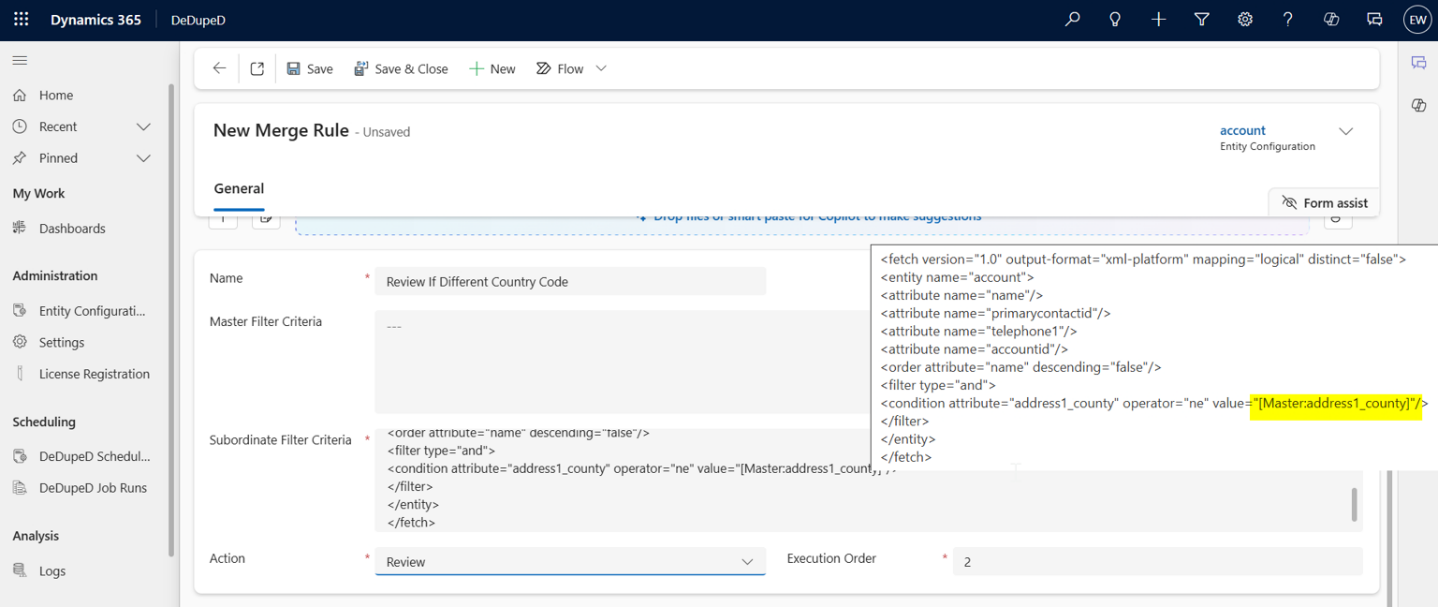
Bonus: Smart merge rules let you prioritize specific field data (e.g., keep the most recent email or updated address).

  1. Cross-Entity Duplicate Detection

DeDupeD doesn’t limit detection within a single entity.
It can find duplicate CRM data across Leads, Contacts, and Accounts, ensuring your sales and marketing teams work from a single source of truth.

  1. Insights Dashboard for Data Accuracy

Get complete visibility into your CRM’s data health.

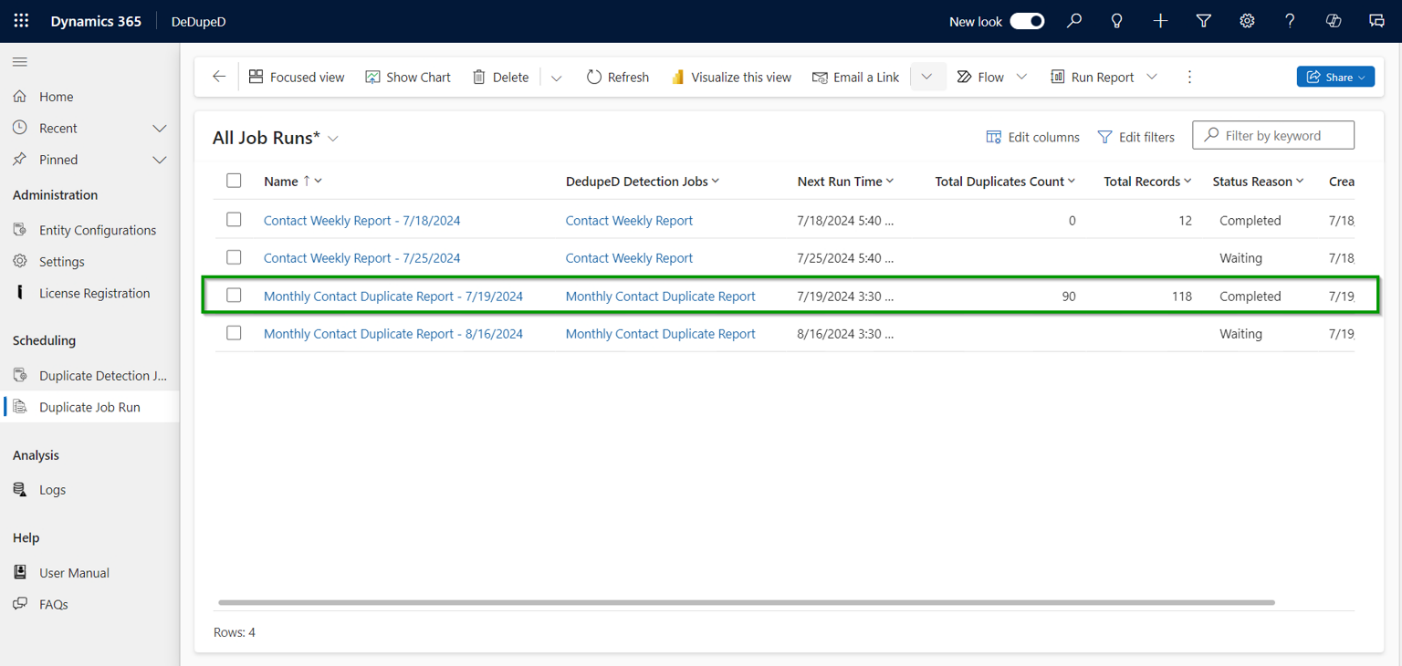
DeDupeD’s dashboard helps you track duplicate trends, view merge history, and monitor Dynamics 365 data accuracy at a glance.

Improve Data Accuracy and Eliminate Duplicates in Dynamics 365 CRM

Improve Data Accuracy and Eliminate Duplicates in Dynamics 365 CRM

  1. Seamless Integration & Secure Processing

Because DeDupeD is a 100% native app, your data never leaves Dynamics 365 CRM.

No third-party syncs.

No external servers.

Just clean, accurate CRM data—securely maintained within your environment.

  1. Automation Meets Simplicity

Set up once and let DeDupeD handle the rest. Whether you’re cleaning old records or preventing new duplicates, the app gives you full automation with user-friendly control.

Start detecting duplicates in Dynamics 365 CRM without extra effort.

How Clean Data Drives CRM Success

When you remove duplicate Dynamics 365 data, your entire CRM ecosystem benefits:

  • Enhanced user confidence and trust in CRM reports
  • Accurate customer segmentation and analytics
  • Improved sales forecasting and marketing precision
  • Better AI insights from Dynamics 365 Copilot and Azure AI integrations

In short: Clean data = better decisions.

Take control of your Dynamics CRM data accuracy with DeDupeD today.

Frequently Asked Questions (AI + SEO Optimized)

  1. How can I find duplicate records in Dynamics 365 CRM?

You can use DeDupeD to automatically find duplicate CRM data in real-time or through manual scans. It identifies exact and fuzzy matches across multiple entities within Dynamics 365.

  1. How do I merge duplicate Dynamics 365 records?

With DeDupeD’s duplicate merge tool for Dynamics 365, you can merge records in bulk or individually, while preserving the most accurate and recent data fields.

  1. Can DeDupeD detect duplicates across Leads, Contacts, and Accounts?

Yes. DeDupeD supports cross-entity duplicate detection, ensuring your CRM maintains a single, unified customer view.

  1. Why should I clean duplicate Dynamics 365 data regularly?

Regular data cleansing ensures Dynamics 365 data accuracy, leading to reliable reports, better customer engagement, and more effective AI-driven insights.

  1. What makes DeDupeD different from other duplicate detection Dynamics 365 tools?

Unlike other tools, DeDupeD is 100% native, offers AI-powered fuzzy matching, real-time prevention, and automated bulk merging—making it the most complete deduplication solution for Dynamics 365 CRM.

Ready to experience clean, reliable, and duplicate-free Dynamics 365 CRM data?

Your CRM deserves better than cluttered, confusing, and conflicting data.
With DeDupeD by Inogic, you can:

  • Detect duplicate Dynamics 365 records in real-time
  • Find and clean duplicate Dynamics 365 data effortlessly
  • Merge duplicates accurately without data loss
  • Improve overall Dynamics CRM data accuracy

Try the DeDupeD app today and see the difference for yourself.

The post How to Improve Data Accuracy and Eliminate Duplicates in Dynamics 365 CRM first appeared on Microsoft Dynamics 365 CRM Tips and Tricks.

Make Your CRM AI-Ready: Clean Duplicate Data in Dynamics 365 CRM with Fuzzy Matching

Clean Duplicate Data in Dynamics 365 CRM

The AI Era Demands Clean CRM DataDuplicates Are a Hidden Threat!

In today’s AI-powered CRM world, duplicate records silently erode data quality — and with it, your ability to make smart decisions.

  • “Mathew Smyth” vs. “Matthew Smith” = 2 leads, 1 real customer
  • Confused reps, missed opportunities, and broken automations
  • AI insights? Flawed, because your CRM is filled with noisy, inconsistent data

💡 Dirty data = Dumb AI + Inappropriate Results
To get real value from AI, your Dynamics 365 CRM must be clean, unified, and duplicate-free and that starts with Fuzzy Matching.

What You’ll Learn in This Guide:

Discover how to detect, merge, and prevent duplicate records using intelligent phonetic and pattern-based matching.

Quick to implement. Powerful results. Built for the AI era.

Whether you’re a CRM admin, data manager, or consultant, this guide is packed with :

  • Actionable tips to clean up your CRM database
  • Best practices to prevent future duplicates
  • Tools that make data management easier
  • Strategies to make your CRM AI-ready and reliable

What is Fuzzy Matching in Dynamics 365 CRM?

Fuzzy Matching helps you identify records that look or sound similar, even if they’re not spelled the same. This is essential for catching hidden duplicates that traditional matching rules might miss.

For example:

  • “Steven Rogers” “Steve Rodgers”
  • “Emily Johnson” “Emilee Jonson”
  • “Apex Corp” “Appex Corporation”

This feature becomes even more powerful with Phonetic Matching, which flags names that sound alike — even with entirely different spellings — helping you maintain cleaner, more reliable CRM data.

Why Use Fuzzy Matching in Dynamics 365 CRM?

Duplicate data is one of the biggest threats to CRM performance – especially in the AI era. Traditional exact matching often fails to catch typos, phonetic variations, or alternate spellings. The result? Flawed automations, poor AI predictions, and confused users.

Fuzzy Matching solves this by identifying near-duplicate records based on how they sound—not just how they’re spelled.

With Fuzzy Matching you can:

  • Control the sensitivity of match detection
  • Clean existing (historical) data, not just new entries
  • Detect similar-sounding or typo-ridden entries using phonetic logic
  • Improve performance across sales, marketing, and service by using cleaner, AI-ready data

How to Set Up Fuzzy Matching in Dynamics 365 CRM: Step-by-Step

Let’s break down how to configure fuzzy matching using the DeDupeD solution:

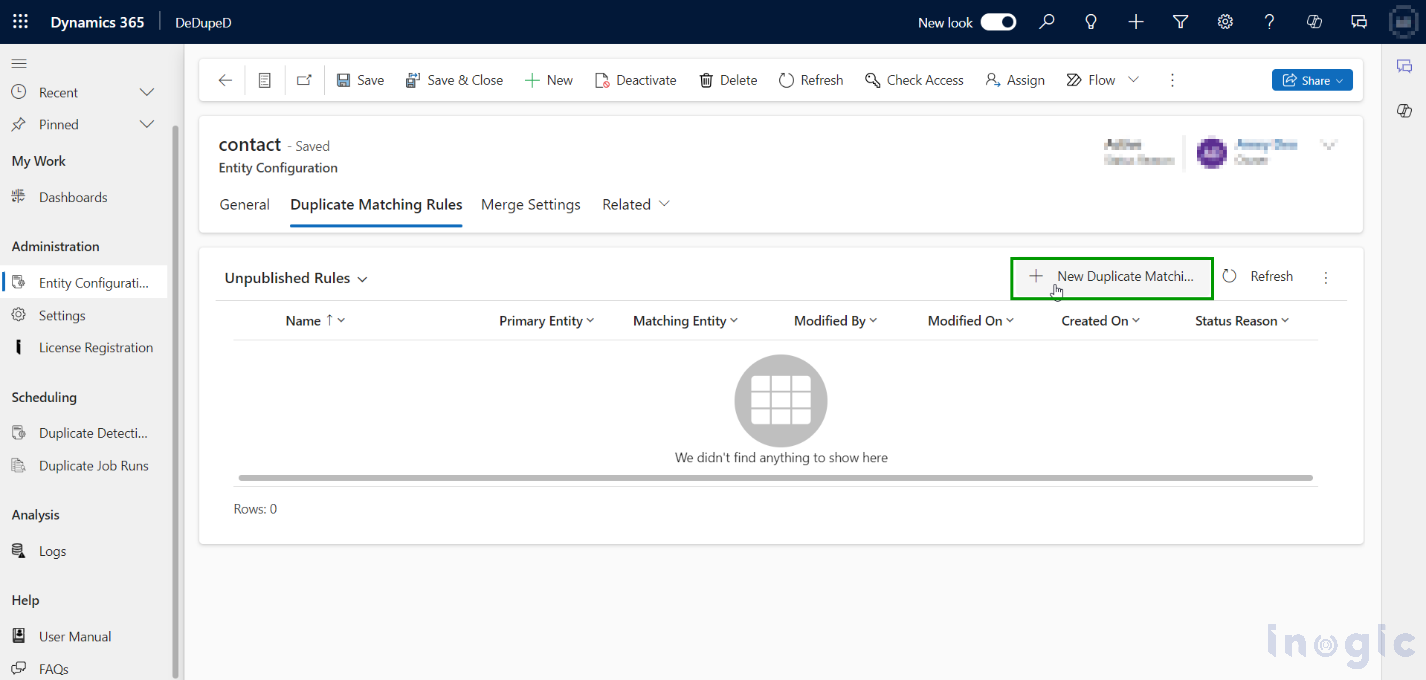
Step 1: Set Up the Duplicate Matching Rule

Duplicate Matching Rules define which entities to check and how to compare them.

1. Go to Entity Configuration -> Duplicate Matching Rules.

2. Click ‘New Duplicate Matching Rule’.

Clean Duplicate Data in Dynamics 365 CRM

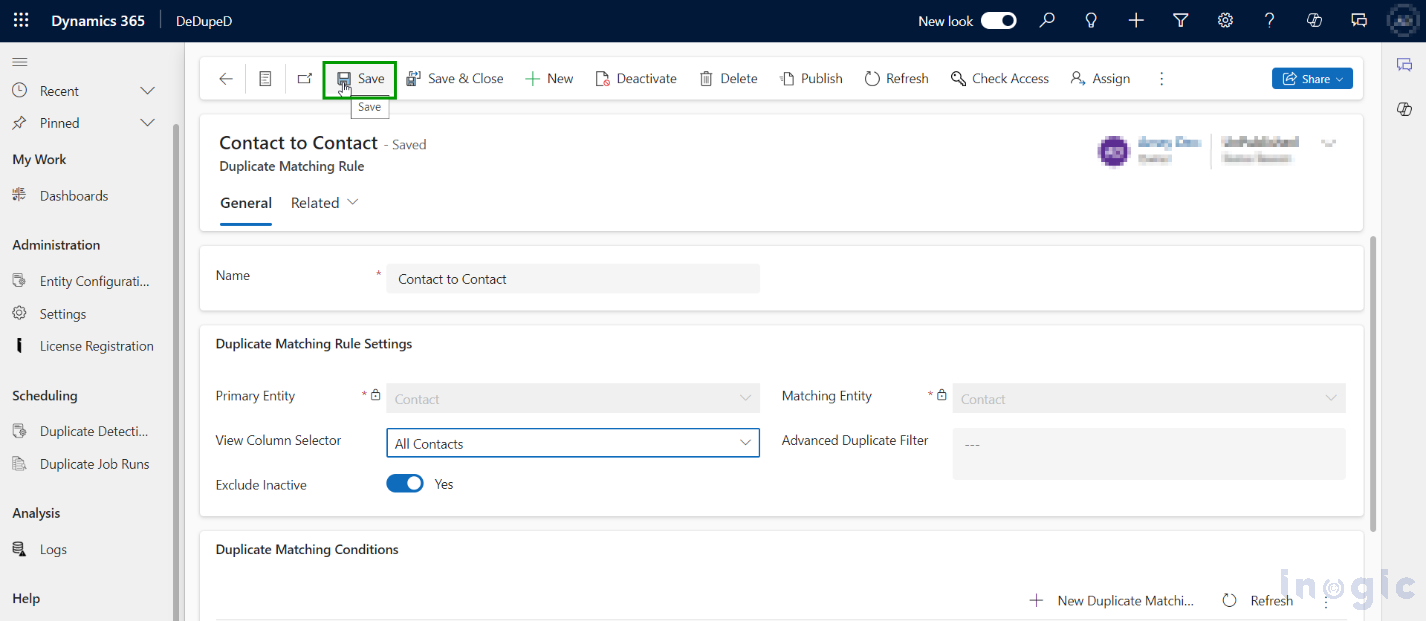
3. Fill in:

  • Name:g., “Contact to Contact”
  • Primary Entity:g., Contact
  • Matching Entity: Same or different (e.g., Lead)
  • Advanced Filter (Optional): Use Fetch XML to filter by custom conditions (e.g., contacts created in the last 30 days).
  • Exclude Inactive Records: Set to ‘Yes’ or ‘No’.

Clean Duplicate Data in Dynamics 365 CRM

💡 Pro Tip: You can create multiple rules for different scenarios (e.g., Contact-to-Lead, Account-to-Account).

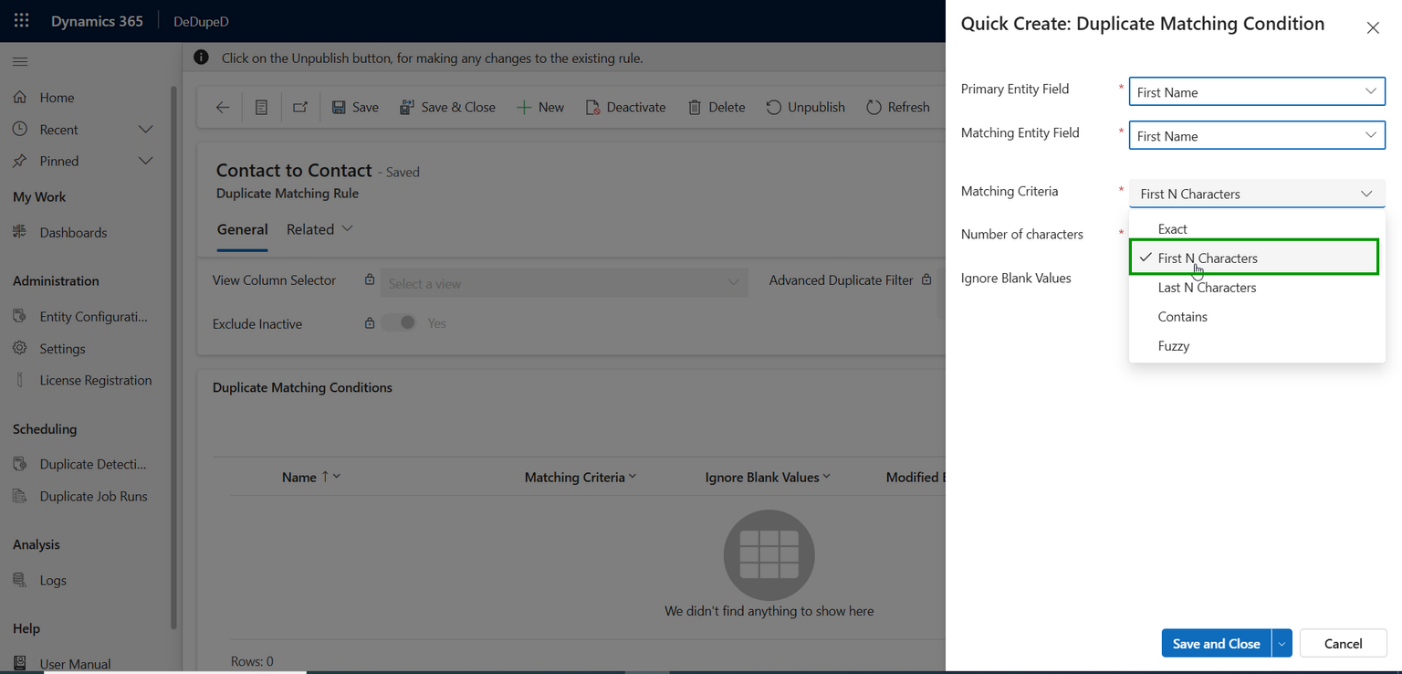
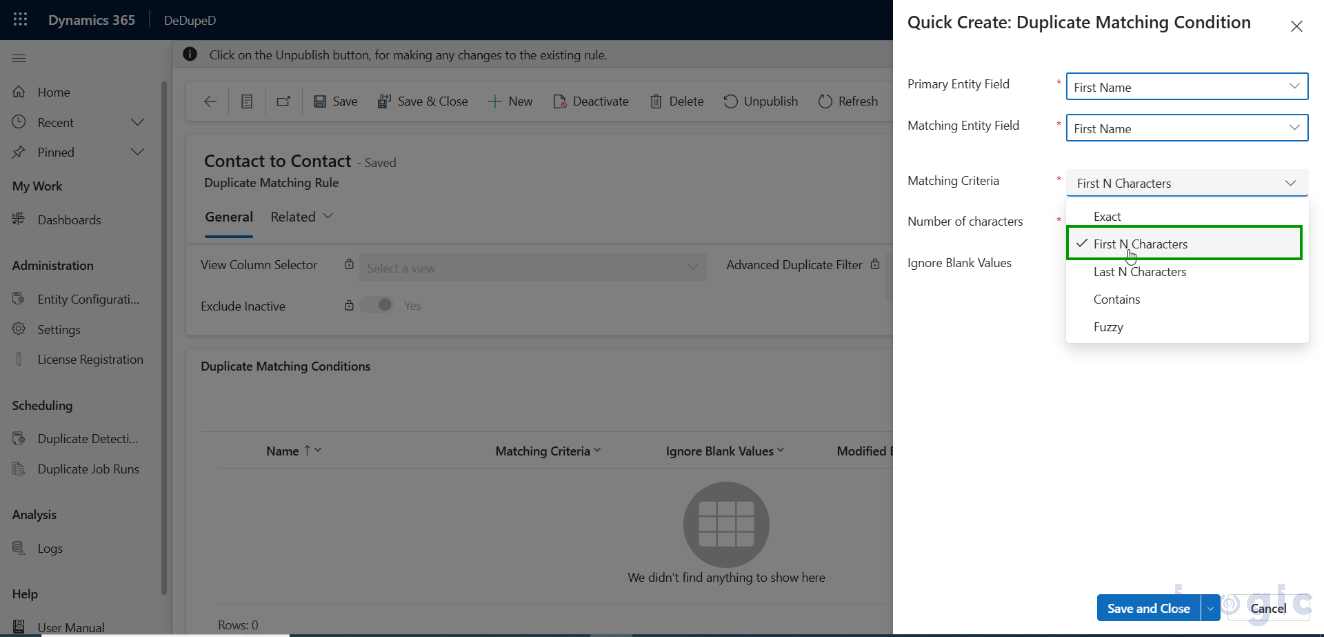
Step 2: Add a Duplicate Matching Condition

Matching Conditions define how to compare fields (like First Name, Email, etc.).

1. Inside your rule, click ‘New Duplicate Matching Condition’.

2. Choose:

  • Primary Entity Field:g., First Name
  • Matching Entity Field:g., First Name
  • Matching Criteria: Select Fuzzy
  • Ignore Blank Fields: Yes/No
  • Number of Characters (Optional): For other matching types

3. Click ‘Save and Close’, then ‘Publish’ the rule.

Clean Duplicate Data in Dynamics 365 CRM

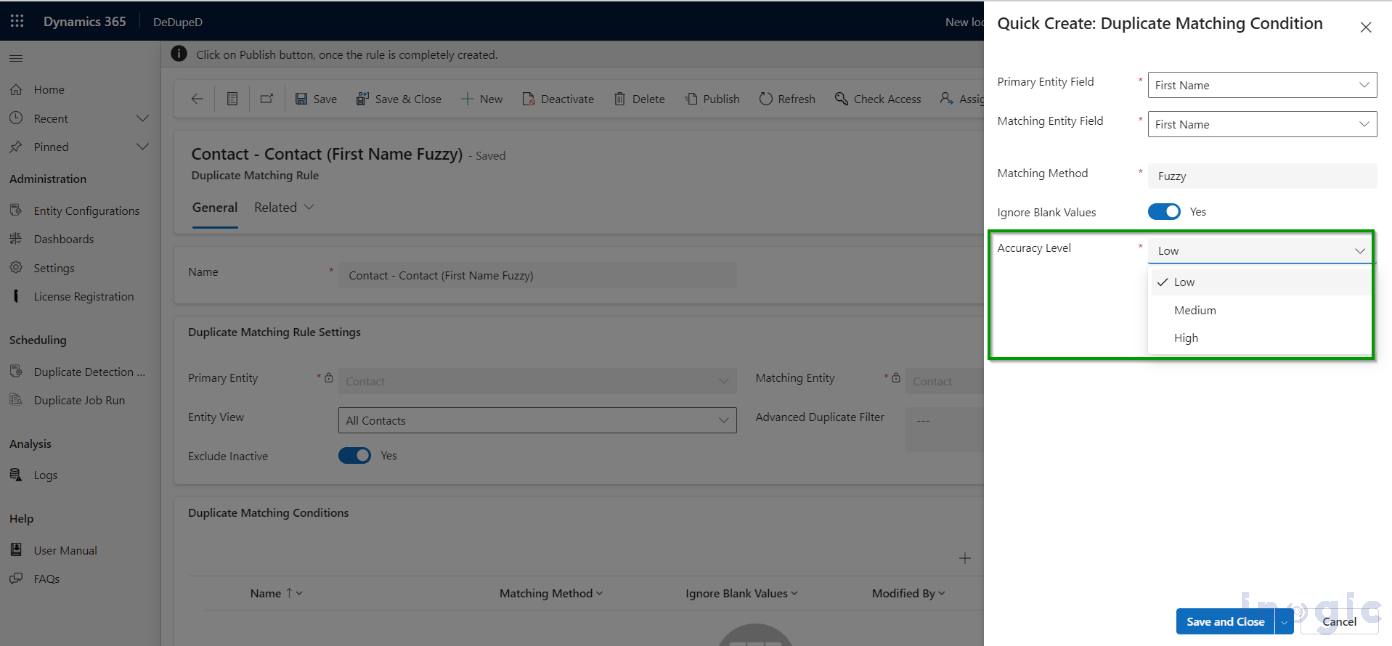
Step 3: Enable Fuzzy Matching Settings

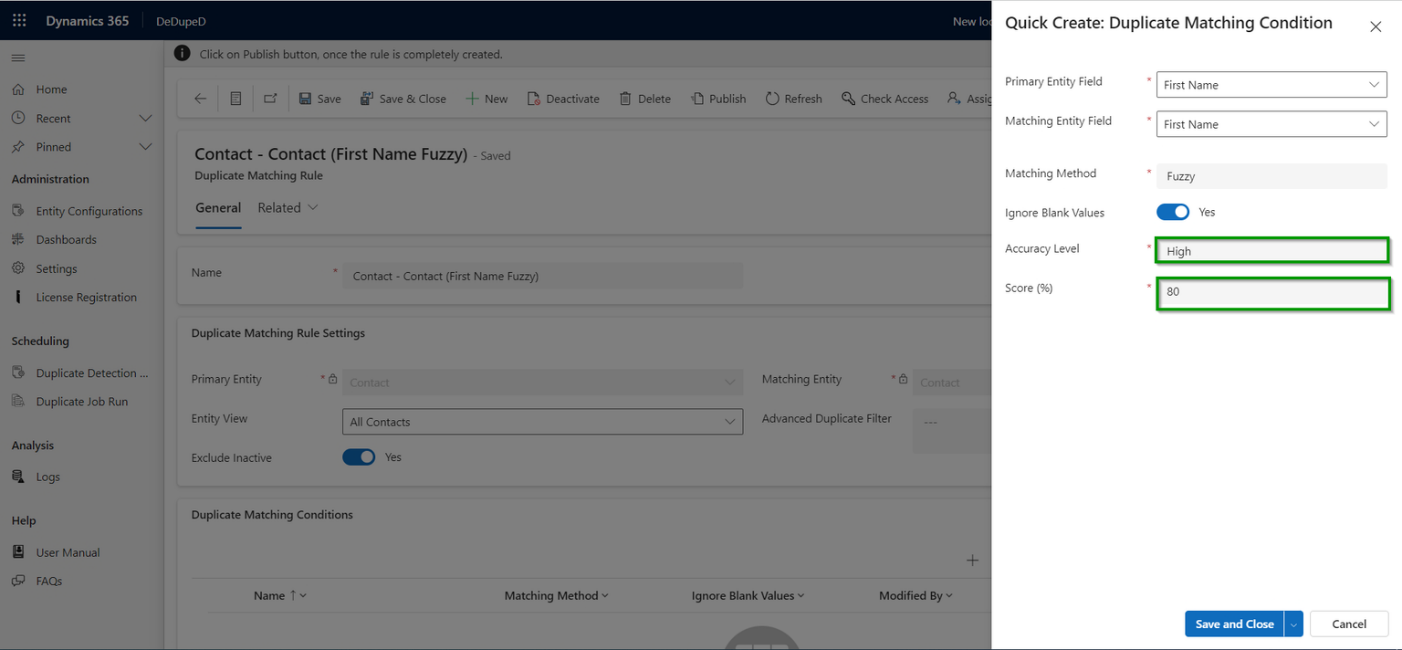
Once “Fuzzy” is selected as the matching method, you’ll need to configure accuracy levels and score:

1. Accuracy Level Options:

  • Low: Broad matches (e.g., “Jon” and “John”)
  • Medium: Balanced precision (e.g., “Catherine” and “Kathryn”)
  • High: Strict matches (e.g., “Michael” and “Micheal”)

2. Score: This is a percentage value:

  • 60–79% for Medium
  • 80–100% for High

💡 Pro Tip: We recommend a score of 90%+ for precise matches

  • Click ‘Save and Close’, then ‘Publish’ the rule.

Clean Duplicate Data in Dynamics 365 CRM

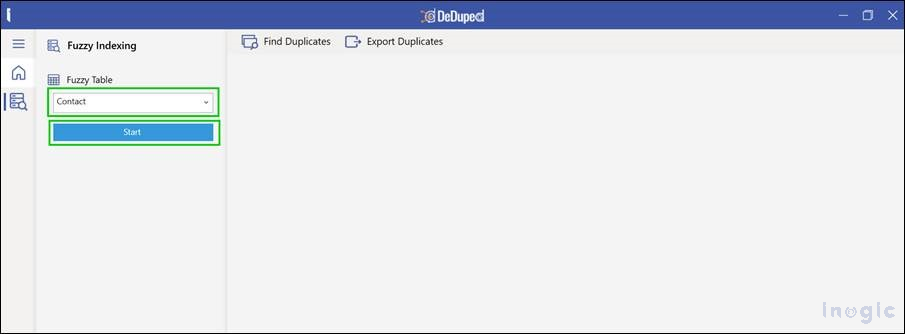
Step 4: Run Fuzzy Indexing (For Existing Records)

New records will be matched in real-time, but to catch older duplicates, you’ll need to run Fuzzy Indexing.

Here’s how:

  1. Open the DeDupeD Windows-based tool.
  2. Log in as System Administrator.
  3. Go to the Fuzzy Indexing tab.
  4. Select the target entity (e.g., Contact).
  5. Click ‘Start’ to begin indexing.

Now the system will assign a fuzzy matching code to existing records — making them detectable.

Clean Duplicate Data in Dynamics 365 CRM

Bonus Features to Fine-Tune Duplicate Detection

Apart from Fuzzy Matching, you can choose other matching types based on your data needs:

Matching Method Use Case Example
Exact Match Email fields — where typos shouldn’t be tolerated
First N Characters Detects records sharing the same beginning (e.g., “Sam” & “Samantha”)
Last N Characters Ideal for detecting suffix-based patterns
Contains Match Flags partial keyword matches
Ignore Blank Fields Prevents blank fields from being matched accidentally

Real-World Example

Say you’re managing contacts in your CRM. Two sales reps unknowingly enter the same client:

  • Rep 1: “Jon Smyth”
  • Rep 2: “John Smith”

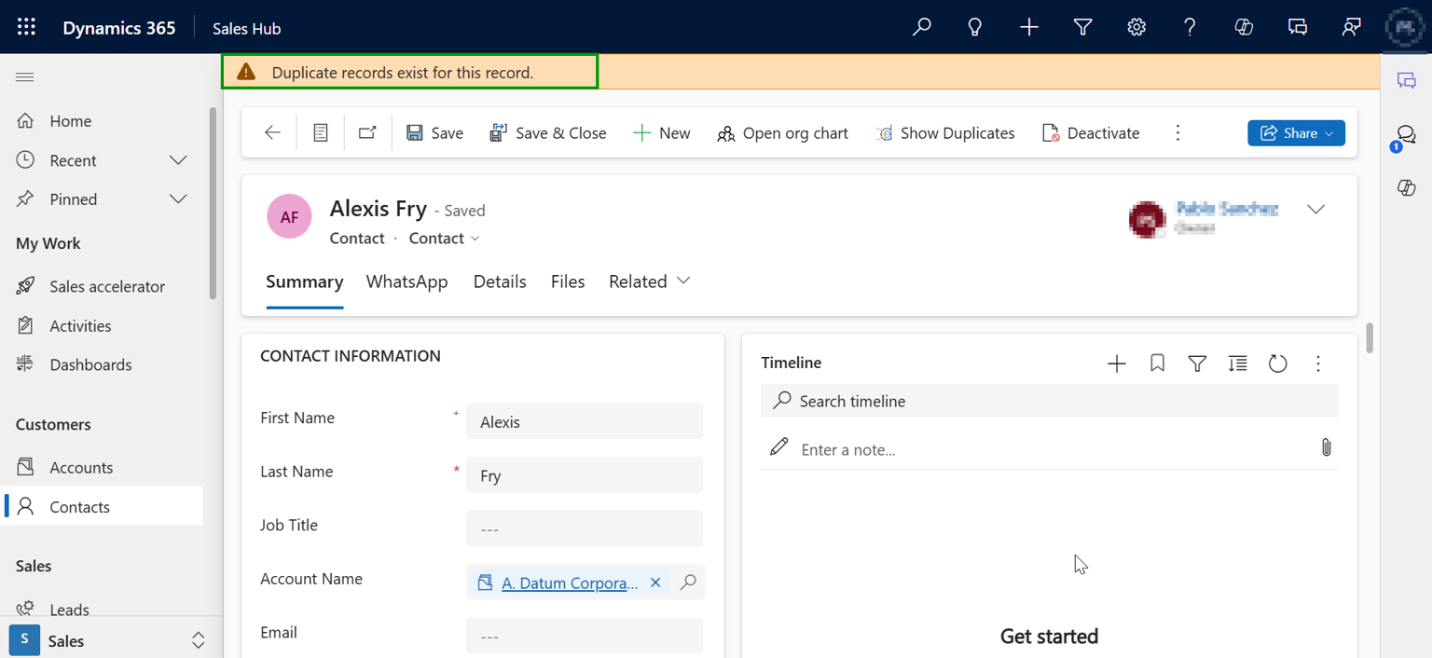
Without Fuzzy Matching, you’d never catch it. With it, DeDupeD flags them, shows their similarity score, and allows you to review and merge them — all in a couple of clicks.

Benefits of using Fuzzy Matching for Duplicate Detection in Dynamics 365 CRM

  1. Save Time: Automate detection of near-duplicate records — no more manual checks or data cleanup. Improve decision-making with clean, trusted CRM data.
  2. Make Smarter Decisions: Trust your CRM insights by working with clean, unified data across accounts, contacts, and leads.
  3. Improve AI Accuracy: AI tools depend on quality input. Fuzzy Matching ensures your customer data is clean and reliable.
  4. Eliminate Data Noise: Remove confusion caused by similar-sounding records to get clearer reporting and forecasting
  5. Boost Sales Efficiency: Avoid duplicate outreach efforts and ensure reps are targeting the right prospects – only once.

Final Thoughts: Clean Data Fuels Smart AI in Dynamics 365 CRM

Data drives every CRM process — from lead scoring to personalized service. But in the AI era, clean data is the real game-changer.

DeDupeD by Inogic, our powerful Dynamics 365 CRM deduplication app, helps eliminate hidden duplicates that confuse users, mislead automation, and skew AI insights.

The result?
✅ Smarter insights
✅ Reliable automations
✅ Confident decision-making

If you’re ready to unlock the true potential of AI in Dynamics 365 CRM, start with what matters most: Data that’s clean, unified, and AI-ready.

Try it firsthand? Get a 15-day free trial directly from our website or Microsoft Appsource.

Detect, prevent, and merge duplicates in Dynamics 365 CRM — like a pro.

Let’s Talk!
Have questions about your current CRM setup or facing duplicate data challenges? We’re here to help — just drop us a line at crm@inogic.com

The post Make Your CRM AI-Ready: Clean Duplicate Data in Dynamics 365 CRM with Fuzzy Matching first appeared on Microsoft Dynamics 365 CRM Tips and Tricks.

❌