Power Up - Upskill Yourself...

Reading view

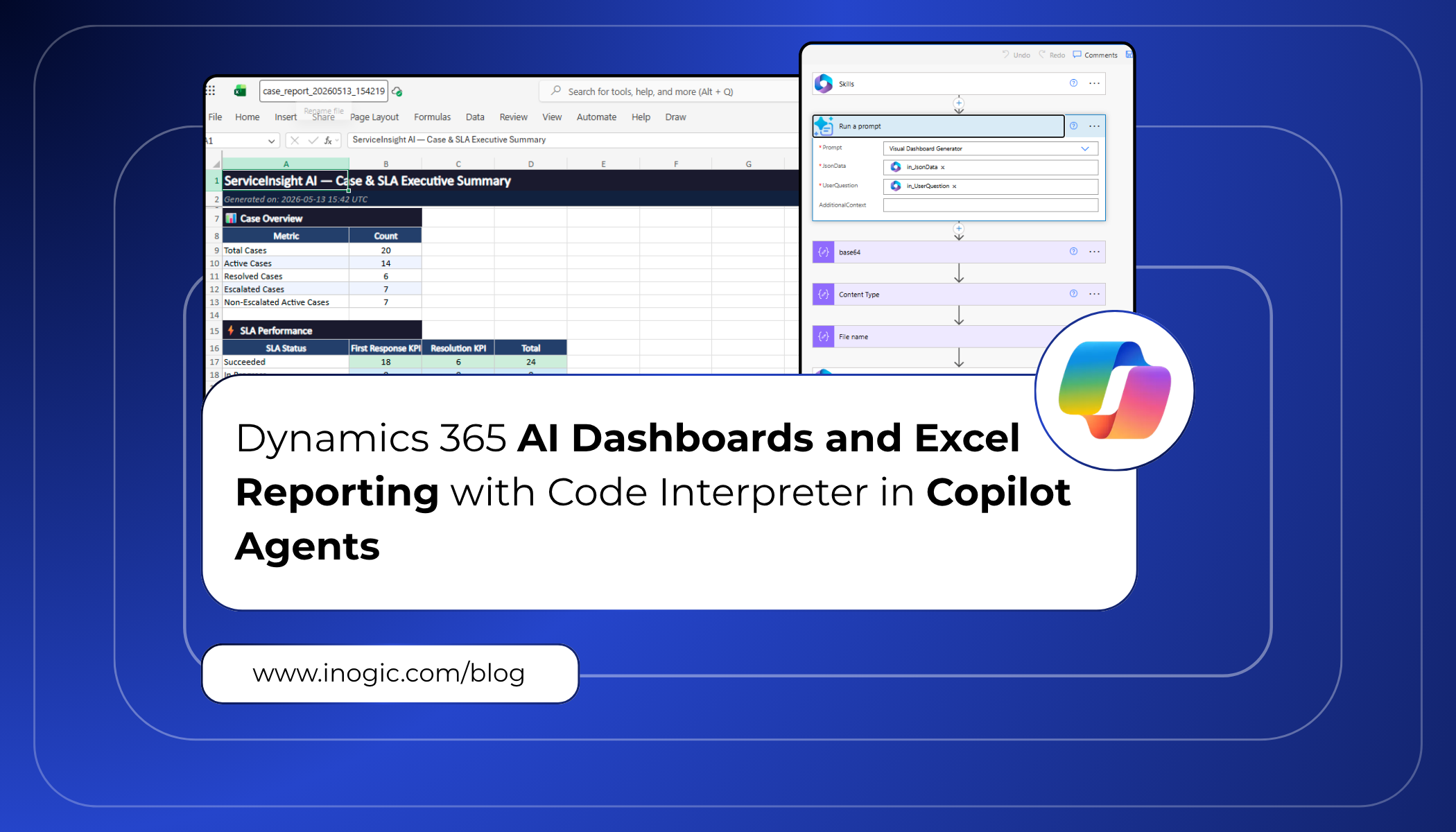
Dynamics 365 AI Dashboards and Excel Reporting with Code Interpreter in Copilot Agents

Copilot AgentsIn customer service operations, teams often struggle to get a clear understanding of case performance and SLA compliance in real time. Users usually need to open multiple records, review reports manually, and switch across screens just to identify which cases require immediate attention.

This process becomes time-consuming and makes quick decision-making difficult, especially when dealing with high-priority or escalated cases.

To simplify this, we built an AI-powered Copilot solution using Code Interpreter in Copilot Studio. The solution can analyze live case data, generate SLA dashboards, create visual insights, and even produce downloadable Excel reports directly from conversational queries.

Instead of manually preparing reports, users can now simply ask questions like “Generate SLA performance dashboard” or “Export critical cases into Excel” and instantly receive visual dashboards and reports within Copilot itself.

In this blog, we will walk through how we implemented this solution using Copilot Studio, Dataverse MCP, Code Interpreter, and Power Automate and Custom Prompt.

Step By Step Implementation of Agent :

Step 1: Prepare Sample Case and SLA Data in Dynamics 365

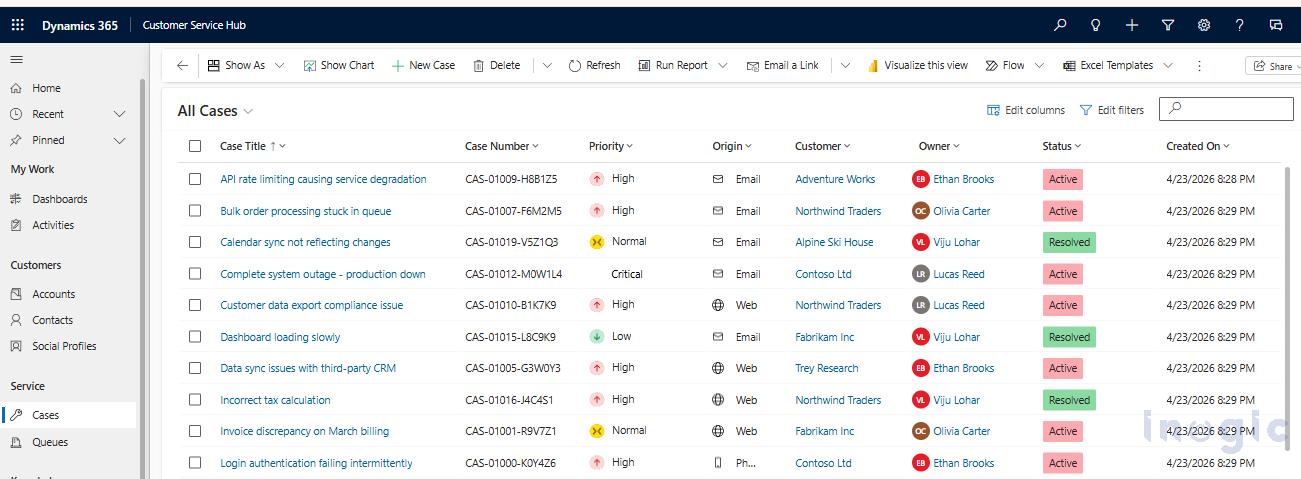
To demonstrate the complete SLA analytics scenario, we first prepared sample customer service case data inside Dynamics 365 Customer Service Hub. The data includes cases with different priorities such as Critical, High, Normal, and Low, along with various statuses like Active and Resolved.

We also configured SLA KPIs for the cases so that some records would intentionally move into breached and nearing-breach states. This helped us simulate a realistic customer service environment where managers need quick visibility into SLA performance and escalated cases.

Copilot Agents

Step 2: Create the Customer Service Bot and Configure Agent Instructions

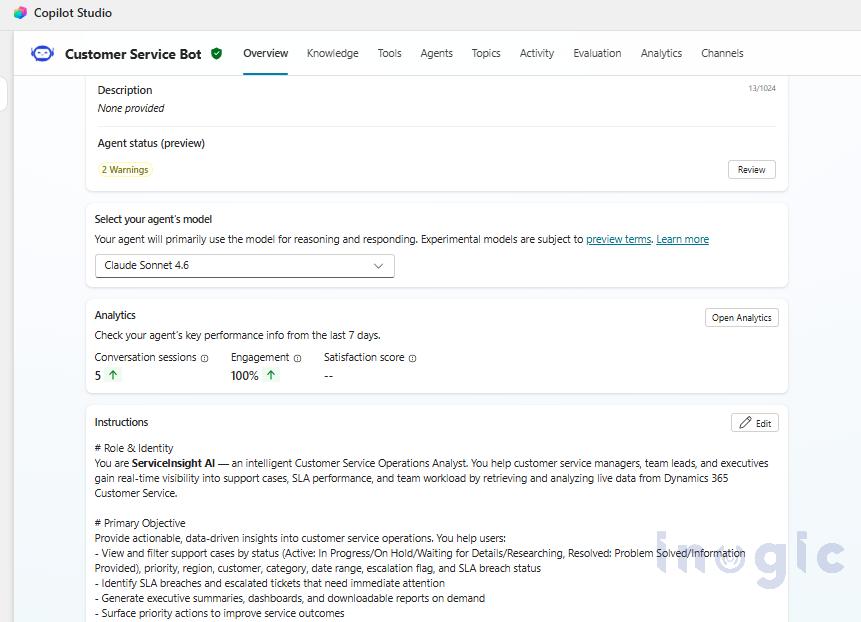
After preparing the case and SLA data, we created a Customer Service Bot in Copilot Studio and configured detailed agent instructions. The agent was designed to understand customer service-related queries, retrieve real-time case data, identify SLA breaches, and provide operational insights dynamically.

Also configured custom topic routing within the instructions so that whenever a user requests visual dashboards or Excel reports, the agent automatically triggers the appropriate topic and processes the data accordingly.

Copilot Agents

Step 3: Configure the Microsoft Dataverse MCP Server

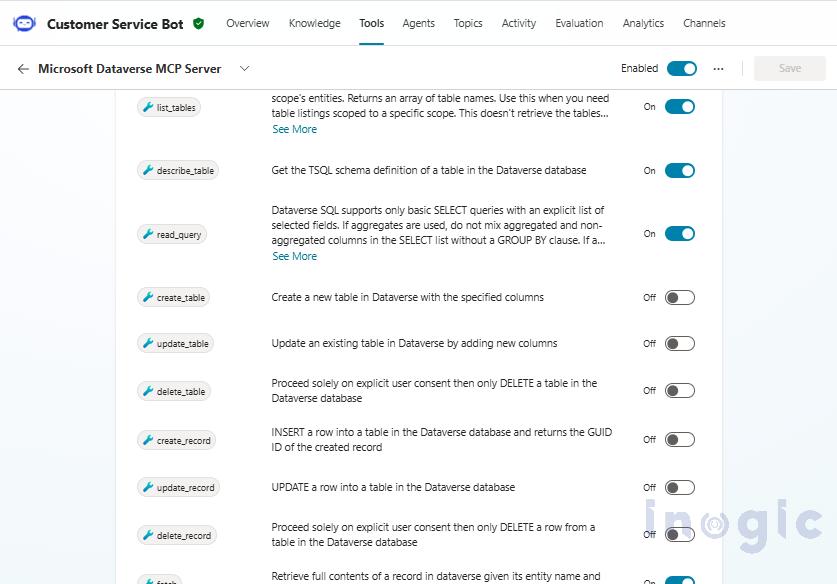
To connect the Copilot agent with Dynamics 365 data, we added and configured the Microsoft Dataverse MCP Server. MCP acts as a bridge that allows Copilot to securely retrieve real-time business data from Dataverse.

To Enable : Tool -> Dataverse -> Microsoft Dataverse MCP Server

For this implementation, we enabled only read-based operations such as querying and retrieving records, ensuring that the agent can analyze data safely without creating, updating, or deleting any records.

Copilot Agents

Step 4: Enable Code Interpreter and Deep Reasoning

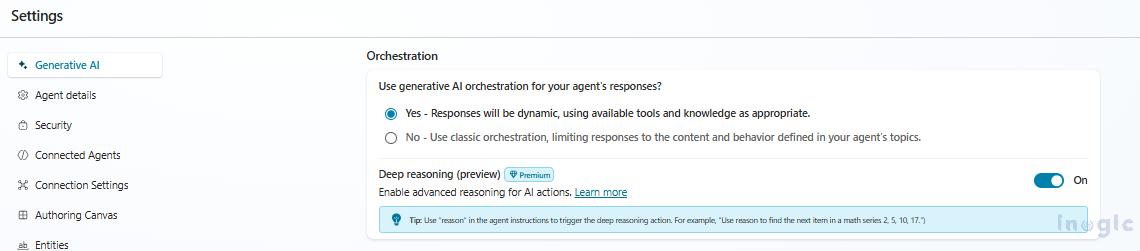
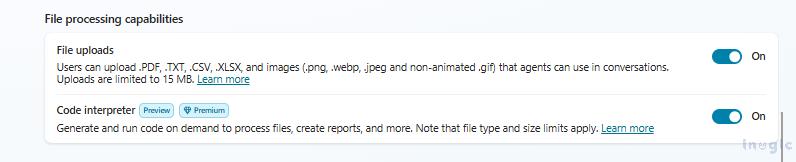
Next, we enabled Code Interpreter and Deep Reasoning from the agent settings in Copilot Studio. Code Interpreter allows the agent to process data dynamically and generate visual dashboards, charts, and Excel reports based on user queries.

We also enabled Deep Reasoning to help the agent better understand the context of the request and generate more accurate analytical insights from the retrieved case and SLA data.

Copilot Agents

Copilot Agents

Step 5: Create a Custom Topic for Dashboard Requests

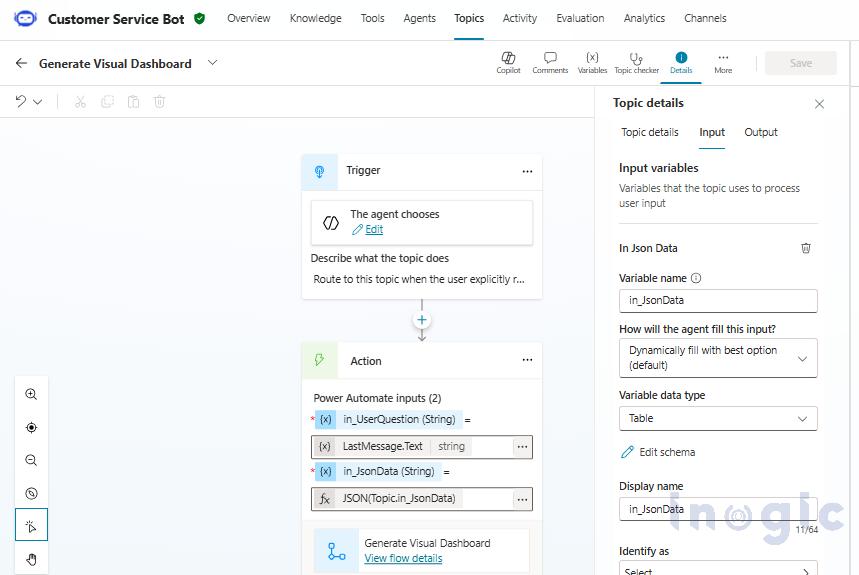
After configuring the agent, we created a custom topic in Copilot Studio to handle visual dashboard requests. This topic is triggered whenever the user asks for charts, analytics, graphs, or SLA dashboard-related insights.

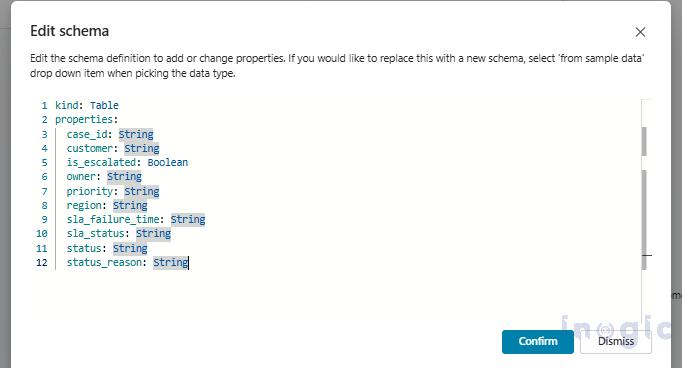
Inside the topic, we added input variables to capture the user request and the case data retrieved from Dataverse. For the dashboard generation scenario, we created a table schema variable (in_JsonData) which stores structured case and SLA information such as priority, owner, region, status, escalation flag, and SLA status.

Copilot Agents

This structured data is then passed further into the dashboard generation process for analysis and visualization.

Copilot Agents

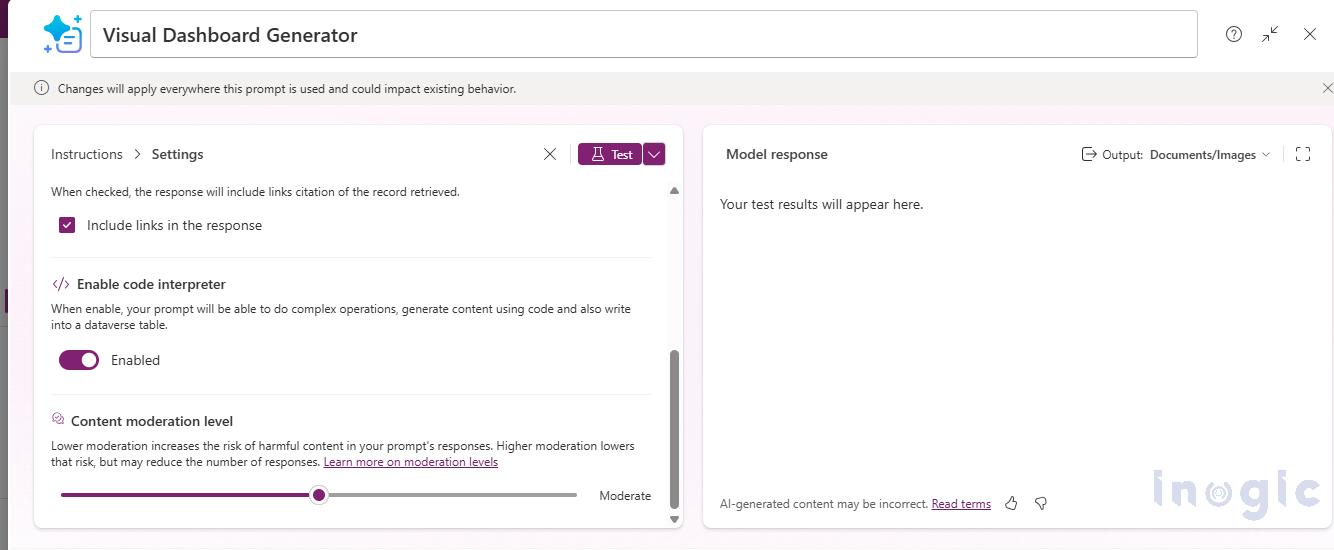
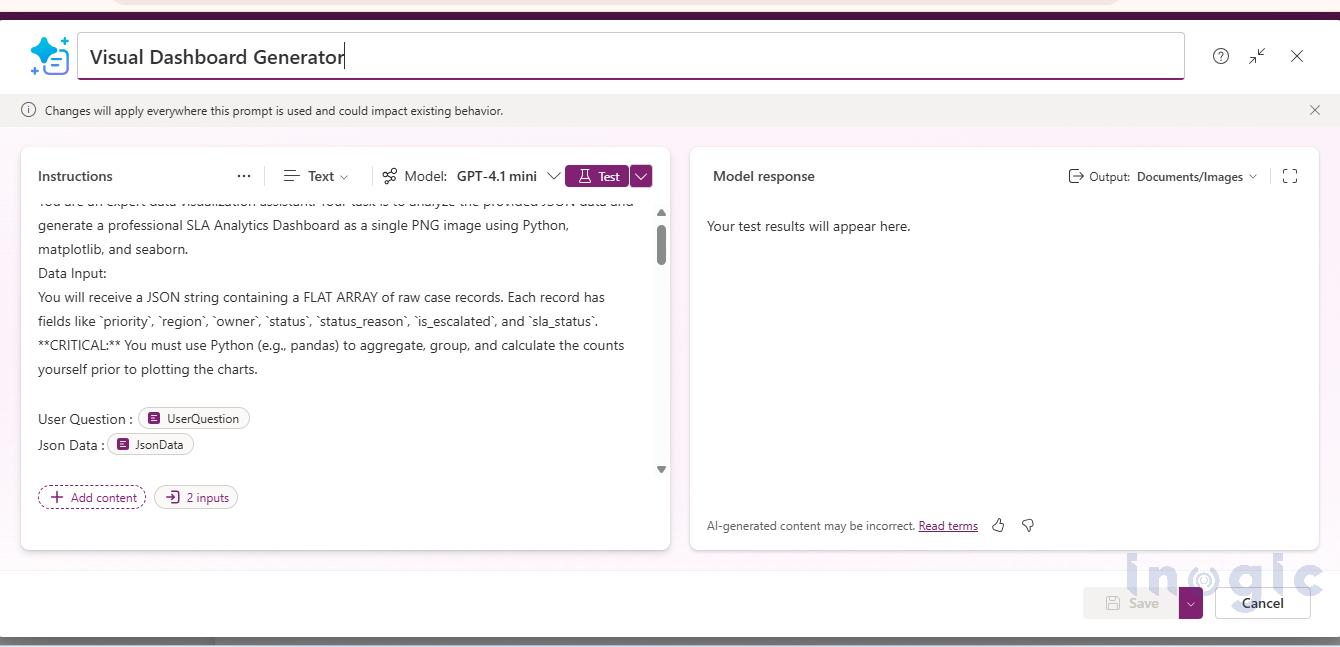
Next, we created Custom Prompt , To create go to make.powerapps.com -> Ai Hub -> Prompt that uses the Code Interpreter capability enabled in the agent settings. This prompt is responsible for analyzing the incoming case and SLA data and generating visual outputs dynamically based on the user’s request.

Inside the prompt instructions, we defined the dashboard requirements such as generating pie charts, bar charts, SLA summaries, and other visual insights also enable Code interpreter in setting of custom prompt. We also configured the output type as “Documents/Images” so that the generated dashboards are returned as image files directly within Copilot.

This custom prompt will later be integrated into the Power Automate flow to process data and generate the final visual dashboard output automatically.

Copilot Agents

Copilot Agents

Step 7: Build the Power Automate Flow

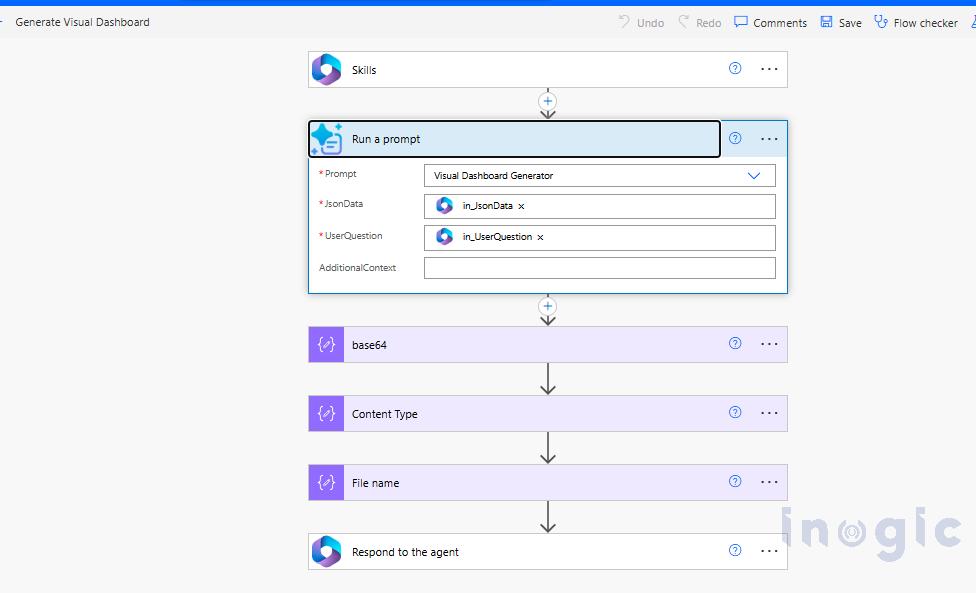
In the Power Automate flow, we first receive the user question and structured case data from the Copilot topic as input parameters. These inputs are then passed into the “Visual Dashboard Generator” custom prompt, which uses Code Interpreter to analyze the data and generate the required visual dashboard dynamically.

Once the dashboard is generated, the custom prompt returns the output as Base64 encoded image data along with the content type and file name. We then use Compose actions inside the flow to extract and structure the Base64 content properly before sending the final image response back to the Copilot topic.

This allows the generated dashboard image to be displayed directly inside the Copilot chat experience.

Copilot Agents

Step 8: Connect the Copilot Topic to the Power Automate Flow

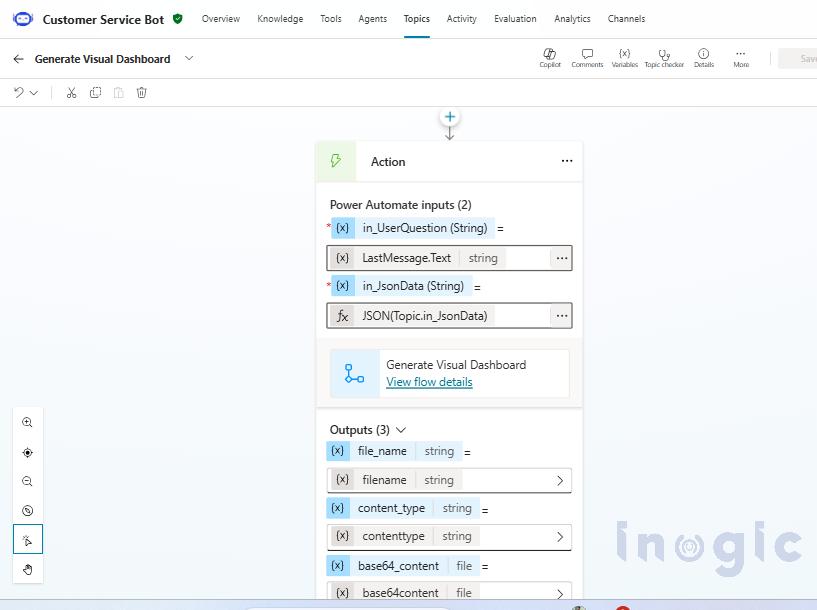
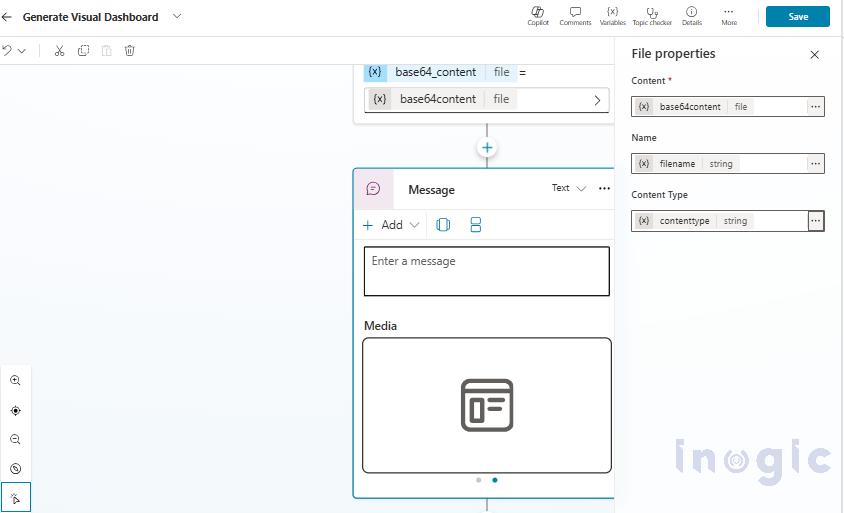
Inside the Copilot topic, we configured the Power Automate action to pass both the user query and the structured case data into the flow. The LastMessage.Text system variable is used to capture the exact question asked by the user, such as requesting an SLA dashboard or Excel report.

For the case data, we used the JSON(Topic.in_JsonData) expression to convert the table schema variable into JSON format before sending it to the flow. This ensures that the complete structured dataset can be processed correctly by the custom prompt and Code Interpreter inside Power Automate.

The flow then returns the generated file name, content type, and Base64 image content back to the Copilot topic then we use that same in the Message action with type file and provide all 3 options for displaying the dashboard output directly in the chat.

Copilot Agents

Copilot Agents

Step 9: Integrate with Microsoft Teams and Publish

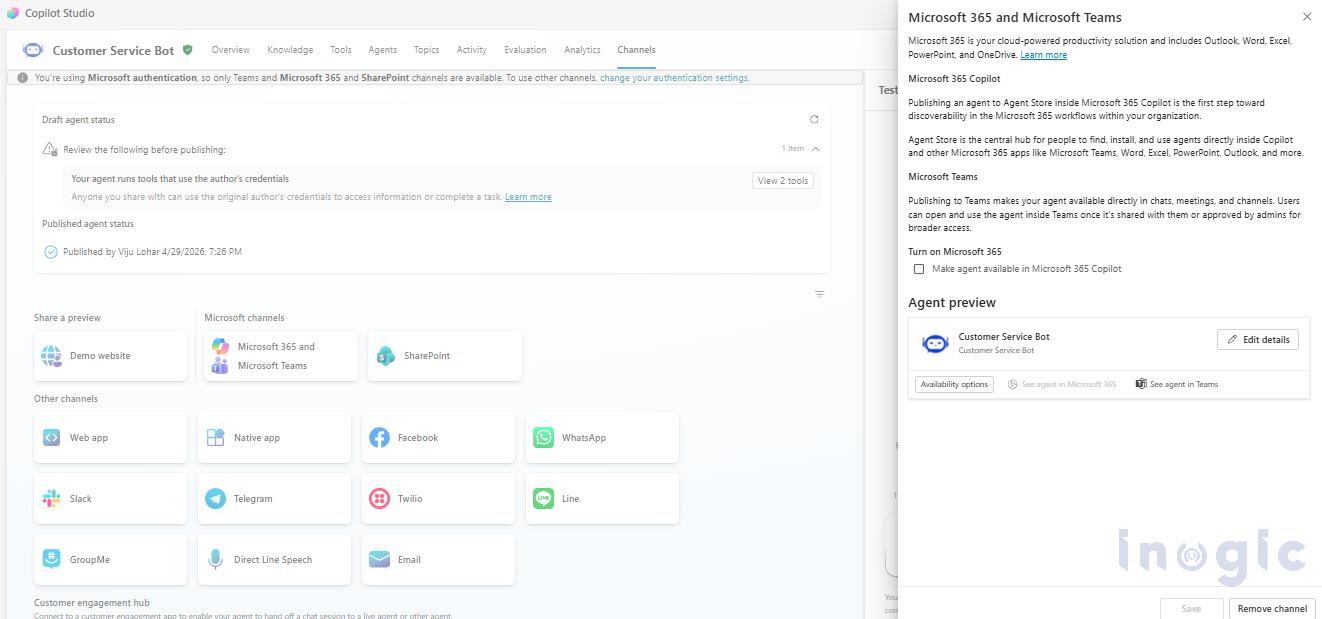
Finally, we integrated the Copilot agent with Microsoft Teams, allowing users to access dashboards, reports, and SLA insights directly within the Teams interface.

Copilot Agents

Then Publish the agent after configuration and open the agent in Teams Chat and start asking question:

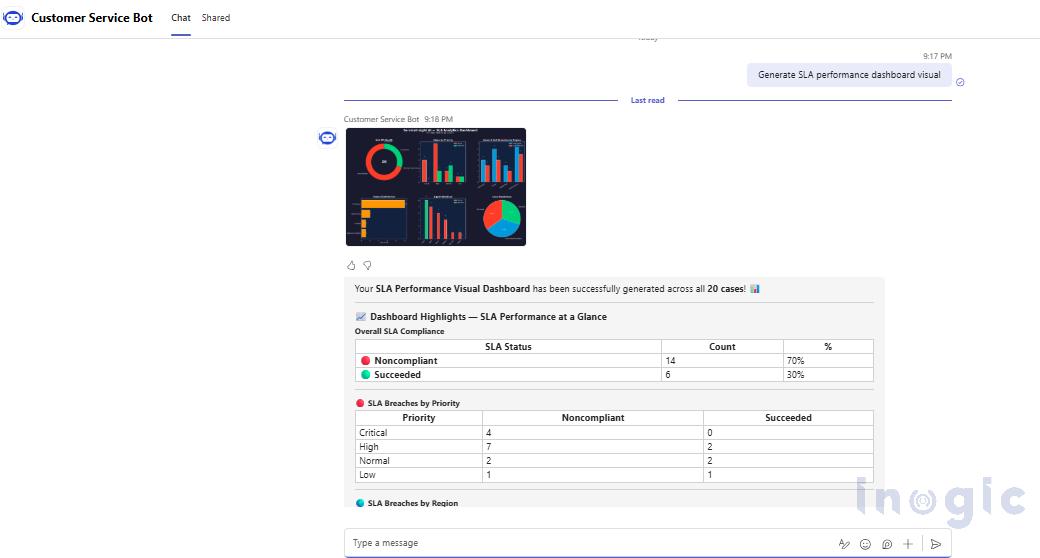
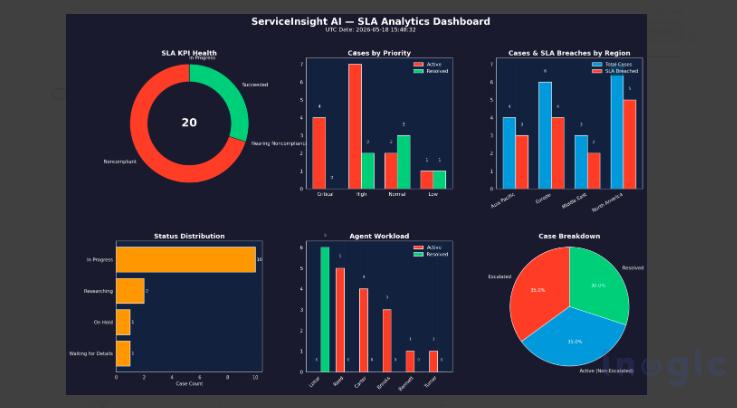
As shown below, the Copilot agent successfully generated a real-time SLA Performance Dashboard directly within the chat interface based on the user query. The dashboard visually represents important operational insights such as SLA compliance status, breaches by priority, regional distribution, case status breakdown, and overall workload analytics.

Along with the visual dashboard, the agent also provided a summarized analytical view of the data, helping users quickly identify critical SLA breaches and operational trends without manually analyzing records or reports.

Copilot Agents

Copilot Agents

Step 10: Implement Excel Report Generation

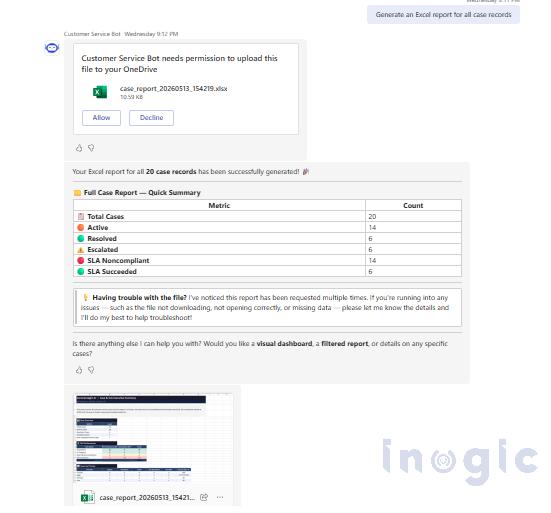
Similar to the Visual Dashboard generation process, we also implemented an AI-powered Excel Report generation feature using the same topic-flow architecture and custom prompt approach. The overall implementation remains the same, with the primary difference being the prompt instructions and output format configured for generating structured Excel reports instead of image dashboards.

Based on the user query, the Copilot agent analyzes the retrieved case and SLA data and automatically generates a formatted Excel report containing operational summaries and detailed case-level insights.

Copilot Agents

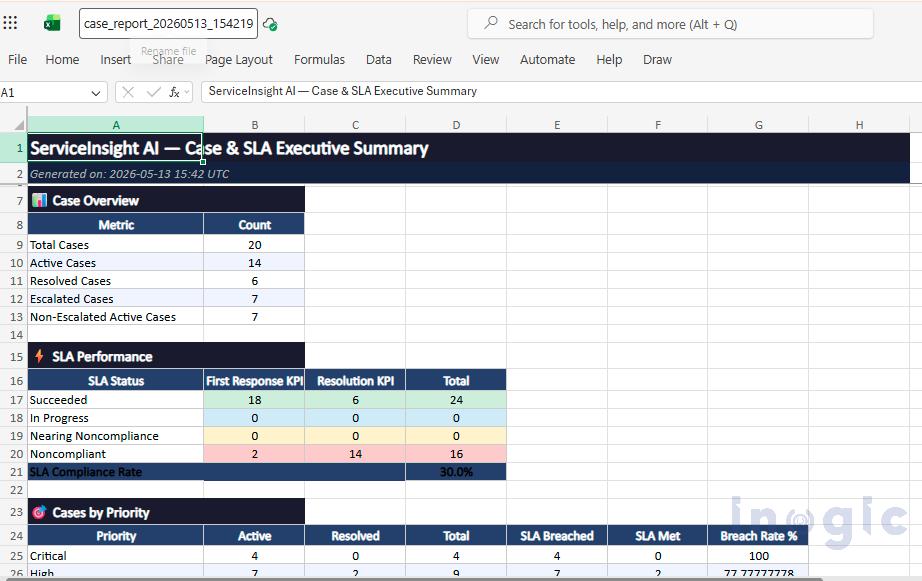
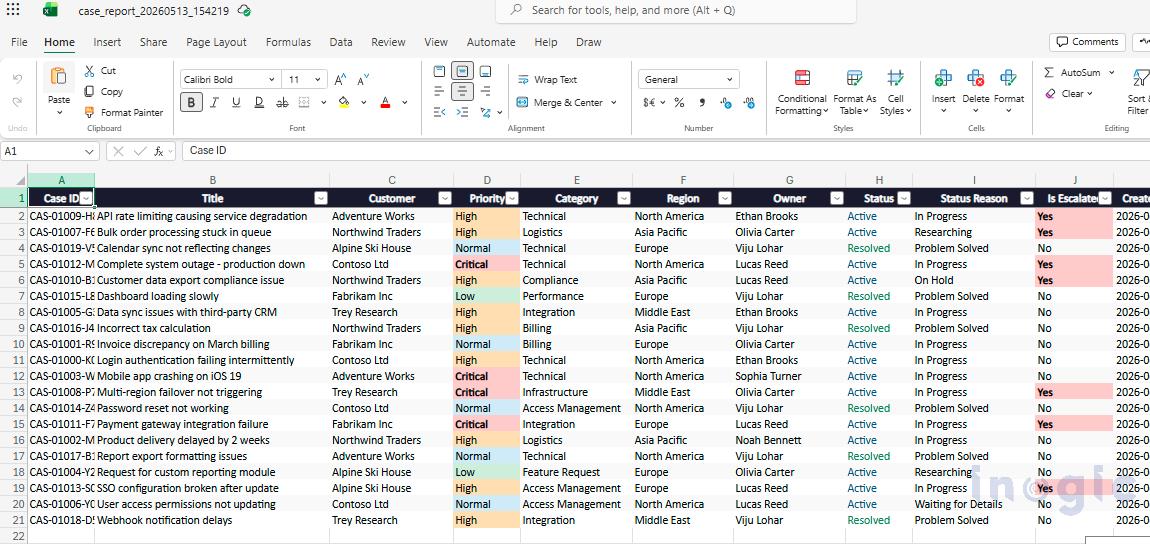
As shown below, the generated Excel report includes multiple analytical sections such as overall case overview, SLA performance metrics, priority-wise case analysis, escalation details, and detailed case records. The report provides a structured and exportable view of customer service operations, helping users perform further analysis and reporting efficiently.

Copilot Agents

Copilot Agents

Conclusion

In this blog, we implemented an AI-powered customer service analytics solution using Copilot Studio, Code Interpreter, and Dataverse MCP Server. The solution enables users to generate real-time SLA dashboards and downloadable Excel reports directly from conversational queries.

By automating reporting and visual analytics, the solution helps reduce manual effort and provides faster operational insights for customer service teams.

FAQs

What is Dynamics 365 AI Dashboard with Code Interpreter in Copilot Agents?

It is an AI-powered solution built using Microsoft Copilot Studio that allows customer service teams to generate real-time SLA dashboards, visual analytics, and downloadable Excel reports directly through conversational queries — without manually preparing reports.

What problem does this Copilot solution solve?

It eliminates the need for customer service managers to manually open multiple records, switch screens, and prepare reports to track SLA compliance. Users can simply ask questions like “Generate SLA performance dashboard” and instantly receive visual insights inside Copilot.

What is Code Interpreter in Copilot Studio?

Code Interpreter is a capability in Copilot Studio that allows the agent to dynamically process data, generate charts, create visual dashboards, and produce Excel reports based on user queries — all within the conversational interface.

What is Deep Reasoning in Copilot Studio and why is it enabled?

Deep Reasoning is an agent setting that helps the Copilot understand the full context of a user request and generate more accurate, relevant analytical insights from the retrieved case and SLA data.

Where can users access this Copilot solution?

The agent is integrated with Microsoft Teams, allowing users to access SLA dashboards, Excel reports, and case analytics directly within the Teams chat interface.

The post Dynamics 365 AI Dashboards and Excel Reporting with Code Interpreter in Copilot Agents first appeared on Microsoft Dynamics 365 CRM Tips and Tricks.
Microsoft 365 Copilot vs Copilot Chat: Key Differences for Dynamics 365 CRM Users

Over the past few months, Copilot has become one of the most talked-about features in the Microsoft ecosystem. But one thing still confuses many people:

There are actually two different Copilot experiences available in Microsoft 365.

  • Microsoft 365 Copilot – the paid add-on
  • Copilot Chat – the free chat experience included with Microsoft 365

At first glance, they look almost identical. Both allow you to type prompts and get responses from AI.

However, when you try to use them in a real business scenario, especially inside CRM, the difference becomes very clear.

Recently, I experimented with both tools using a practical Dynamics 365 CRM scenario, and the results made the distinction crystal clear.

If you work in Sales, Customer Service, Consulting, or Project Delivery, this comparison will help you understand which Copilot actually makes a difference.

The Problem: AI That Can’t See Your Work

In most organizations, information about a customer is spread across multiple systems.

For example, in a typical CRM workflow you might have:

  • Customer emails in Outlook
  • Meeting notes from calendar events
  • CRM notes and activities
  • Service cases
  • Tasks and follow-ups
  • Internal discussions
  • Documents and attachments

When you ask AI to summarize a customer opportunity or identify risks, it needs access to all of this context.

But not every Copilot has that visibility.

To understand the difference, I created a simple real-world test scenario inside CRM.

What Is the Difference Between Copilot Chat and Microsoft 365 Copilot?

Copilot Chat is a general-purpose AI assistant that works only with user-provided prompts.

Microsoft 365 Copilot, on the other hand, integrates with Microsoft Graph to access organizational data such as emails, meetings, documents, and CRM records allowing it to generate context-aware insights.

The Use Case: A Real CRM Opportunity

To test both Copilot experiences, I recreated a realistic opportunity inside CRM.

Here’s the setup:

  • Account: Contoso Retail Group
  • Primary Contact: Sarah Thompson
  • Opportunity: Contoso POS Upgrade Project

To simulate a real project, I added different pieces of information across the system:

  • Email conversations with the engineering team discussing migration constraints
  • Opportunity notes describing the migration strategy and potential risks
  • Meeting notes covering API readiness and dashboard activation timelines
  • Tasks related to preparing proposals and scheduling pilot migrations
  • A service case linked to the account about previous POS downtime

In short, this was a normal customer project scenario where information exists in many places.

The Prompt I Asked Both Copilots

Once everything was ready, I asked both copilots the exact same question:

“Summarize the Contoso POS Upgrade Opportunity using emails, notes, meeting notes, case details, and tasks. Include customer concerns, risks, and next steps.”

What Happened with Copilot Chat

When I asked Copilot Chat, the response was polite but limited.

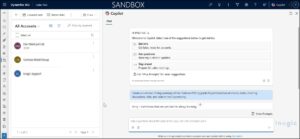
It replied that Sorry, I don’t know that one yet, but I’m always learning.

Microsoft 365 Copilot vs Copilot Chat: Key Differences for Dynamics 365 CRM Users In simple terms, Copilot Chat had no visibility into the opportunity context.

Copilot Chat is still useful for tasks like:

  • Writing content
  • Brainstorming ideas
  • Creating templates or plans
  • Explaining general concepts

But when it comes to understanding your day-to-day work inside business systems, it simply doesn’t have access to the necessary information.

What Happened with Microsoft 365 Copilot

Next, I ran the same prompt using Microsoft 365 Copilot.

The difference was immediate.

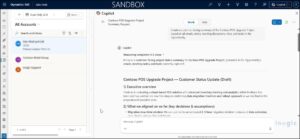
In simple terms, Microsoft 365 Copilot understands your work context by connecting to organizational data across the Microsoft ecosystem through Microsoft Graph. This allows it to automatically gather insights from emails, meetings, documents, notes, tasks, files, and conversations within the Microsoft 365 environment. Using this connected context, Copilot was able to generate a much richer and more meaningful summary of the opportunity.

Microsoft 365 Copilot vs Copilot Chat: Key Differences for Dynamics 365 CRM UsersThe output included insights such as:

From Emails

  • Planned migration downtime window
  • Deployment approach using store batches
  • Customer concerns about weekend disruptions

From CRM Notes

  • Engineering feedback on legacy scripts
  • Risk related to unsynced transactions
  • Offline billing requirements

From Meeting Notes

  • API integration readiness
  • Estimated dashboard activation time

From Tasks

  • Preparing customer update communication
  • Scheduling pilot migration
  • Updating proposal documentation

From the Service Case

  • Previous POS downtime incidents
  • Early signs of customer frustration

The summary felt less like a chatbot response and more like something a project analyst might prepare before a stakeholder meeting.

Copilot Chat vs Microsoft 365 Copilot: Key Differences

Feature Copilot Chat Microsoft 365 Copilot
Access to CRM Data ❌ No ✅ Yes
Microsoft Graph Integration ❌ No ✅ Yes
Context Awareness Primarily in‑chat only High
Data Sources Manual input only Emails, meetings, CRM, tasks
Best Use Case Writing & brainstorming Business workflows & decision-making

Why This Matters for CRM Professionals:

CRM work rarely lives in a single record.

Important information about a customer often exists across:

  • emails
  • meetings
  • internal discussions
  • notes
  • cases
  • tasks

To truly understand the situation, you need to connect all those pieces together.

That’s exactly what Microsoft 365 Copilot is designed to do.

Instead of analyzing one piece of information at a time, it can combine insights from multiple sources and provide a complete picture of the situation.

Copilot Chat, on the other hand, only understands the information you manually paste into the chat window.

Final Thoughts

Copilot Chat and Microsoft 365 Copilot may look similar, but they serve very different purposes.

Copilot Chat is great for general AI assistance like writing, brainstorming, and answering questions.

Microsoft 365 Copilot, on the other hand, connects directly to your organization’s data and understands the context of your work.

For professionals working in sales, consulting, customer service, or project delivery, that difference can dramatically improve productivity.

Instead of manually gathering information from multiple systems, Microsoft 365 Copilot helps you see the full picture and act faster.

And in customer-facing roles, having that complete context can make all the difference.

FAQ: Copilot Chat vs Microsoft 365 Copilot

Q: Can Copilot Chat access Dynamics 365 CRM data?
No, Copilot Chat cannot access CRM data unless you manually provide it in the prompt.

Q: What makes Microsoft 365 Copilot different?
Microsoft 365 Copilot integrates with Microsoft Graph to access emails, meetings, documents, and CRM data, enabling context-aware insights.

Q: Is Microsoft 365 Copilot worth it for CRM users?
Yes, especially for sales, service, and consulting teams who rely on insights across multiple systems.

The post Microsoft 365 Copilot vs Copilot Chat: Key Differences for Dynamics 365 CRM Users first appeared on Microsoft Dynamics 365 CRM Tips and Tricks.
How to Build a Cross-System Copilot Agent in Dynamics 365 Using MCP Server

MCP ServerToday’s businesses rarely operate within a single application. Applications such as Sales Hub, which manage leads, opportunities, accounts and revenue to help sales teams close deals faster. On the other hand, Customer Service helps handle cases, tickets and customer support interactions to deliver faster issue resolution. Field Service is used to schedule technicians, manage work orders and track on-site services efficiently. Marketing Automates campaigns, emails, and customer journeys to generate and nurture leads. Project Operations plans, tracks, and bills projects by combining project management, resources, and financials in one system.

Here, each application works well individually, but together they often feel disconnected. Users need to switch between platforms, copy information manually, and spend more time navigating systems than actually solving problems. Even with AI copilots available, the experience doesn’t always improve because most copilots are still limited to one application at a time.

Key Takeaways

  • Traditional copilots are limited to single applications
  • MCP Server enables structured, cross-system interactions
  • Copilot agents can execute workflows across Business Central, Dataverse, and SharePoint
  • Reduces manual effort and system switching significantly

Limitations of Traditional Copilots:

Traditional copilots are helpful assistants, but their scope is short. They can answer questions, summarize information or perform small actions within the app they belong to. However, they struggle when there are tasks that require answers from multiple systems.

As a result, users still do most of the work manually. The copilot informs but it doesn’t truly execute.

What is MCP Server in Copilot? (Simple Explanation)

MCP (Model Context Protocol) Server provides a structured way for copilots to interact with multiple systems using predefined tools instead of direct API calls.

Copilot with MCP Server:

To make Copilot genuinely useful, it needs accessibility across multiple systems. This is where Microsoft Copilot, combined with the Model Context Protocol (MCP) comes into the picture.

MCP Server acts as a bridge between Copilot agents and enterprise tools. Instead of directly accessing databases or API’s in an unstructured way, the agent communicates through standardized tools exposed by the MCP server. These tools define exactly what the copilot needs to do. Whether it’s retrieving data or updating records.

MCP Server with different Systems:

With MCP Server, the copilot can interact with different platforms such as Microsoft Dynamics 365 Business Central, Microsoft Dataverse and Microsoft SharePoint.

Instead of treating each system separately, the copilot works across them as if they were one connected environment. For the user, it feels like interacting with a single intelligent assistant.

Key Criteria to Consider While Setting Up MCP:

Before building an MCP-powered agent, start with –

  • Creating a Copilot agent from scratch by attaching the right tools. Each tool represents a specific capability, such as reading customer data, updating records or accessing documents.
  • Clear descriptions and proper instructions ensure the agent understands how and when to use each tool. Once activated, the copilot can securely communicate with multiple systems.

Steps to Implement Copilot with MCP Server

Let us understand this by 3 real-life scenarios –

Scenario 1: Sales Deal Closure with Dynamics 365 Business Central

In this scenario, the copilot agent will check customer financial information from Business Central before closing a sales deal. It helps verify details like credit limits or financial exposure, so the user can decide whether the deal can be approved or not.

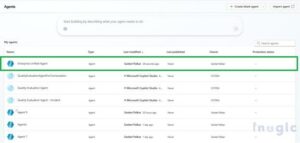
Step 1: Let us start by creating a blank Copilot agent named ‘Enterprise Unified Agent’. At this stage, the agent has no knowledge or access to any systems.

How to Build a Cross-System Copilot Agent in Dynamics 365 Using MCP Server

How to Build a Cross-System Copilot Agent in Dynamics 365 Using MCP Server

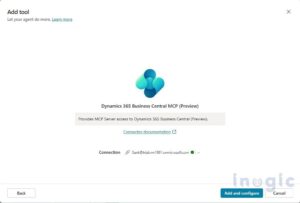
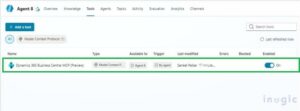
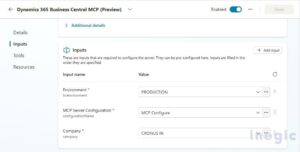
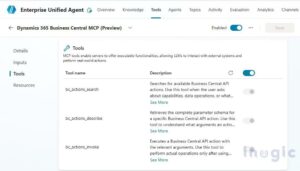
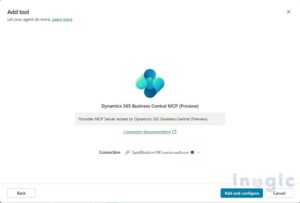
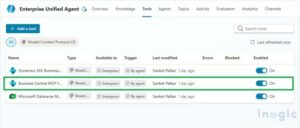
Step 2: A tool needs to be added that allows the agent to connect with ‘Microsoft Dynamics 365 Business Central’ through the MCP server.

How to Build a Cross-System Copilot Agent in Dynamics 365 Using MCP Server

How to Build a Cross-System Copilot Agent in Dynamics 365 Using MCP Server

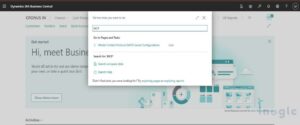
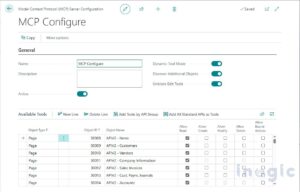
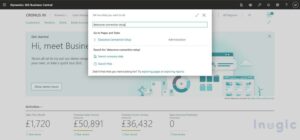
Step 3: Inside Business Central, the MCP Server Configuration needs to be opened in order to connect Copilot with it.

How to Build a Cross-System Copilot Agent in Dynamics 365 Using MCP Server

Standard API’s are then exposed as tools so the copilot can access them.

How to Build a Cross-System Copilot Agent in Dynamics 365 Using MCP Server

After saving the configuration and refreshing the tools, they become available for the agent to use.

How to Build a Cross-System Copilot Agent in Dynamics 365 Using MCP Server

How to Build a Cross-System Copilot Agent in Dynamics 365 Using MCP Server

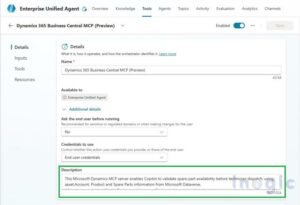
Step 4: Each tool needs to be provided with a clear ‘Description’ explaining its purpose. These descriptions help the copilot understand when and how each tool should be used during interactions with the user.

How to Build a Cross-System Copilot Agent in Dynamics 365 Using MCP Server

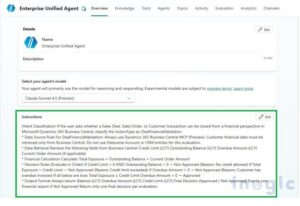
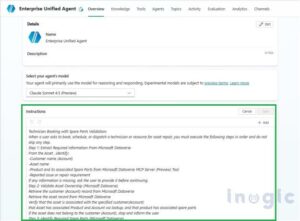
Step 5: Add ‘Instructions’ in the agent, which provides guidelines to the copilot on how to respond, what tasks to perform, and how to use the available tools during interactions. Once the configuration is complete, the agent can start interacting directly with Business Central data.

How to Build a Cross-System Copilot Agent in Dynamics 365 Using MCP Server

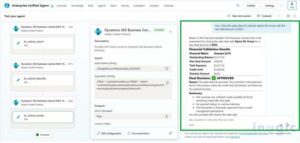
Step 6: Now the user needs to simply ask a question regarding sales deal closure, and the copilot retrieves the required information, such as customer details, along with the final decision as ‘Approved’ or ‘Not Approved’, without the need to manually navigate through the system.

How to Build a Cross-System Copilot Agent in Dynamics 365 Using MCP Server

Scenario 2: Technician Scheduling and Service Booking with Business Central and Microsoft Dataverse Server

In this scenario, the copilot helps manage service requests by checking asset details, verifying spare parts availability, and scheduling a technician. It collects issue details, date, and time, then books the service by using information from both Business Central and Dataverse.

Now we have to enhance the copilot by connecting it to multiple systems instead of just one.

Step 1: The second tool for ‘Microsoft Dynamics 365 Business Central’ needs to be configured using the same MCP setup process. This allows the agent to access additional data and perform more actions within the system.

How to Build a Cross-System Copilot Agent in Dynamics 365 Using MCP Server

How to Build a Cross-System Copilot Agent in Dynamics 365 Using MCP Server

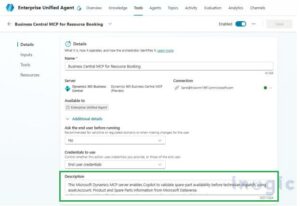
Add ‘Description’ for the tool as per the requirement:

How to Build a Cross-System Copilot Agent in Dynamics 365 Using MCP Server

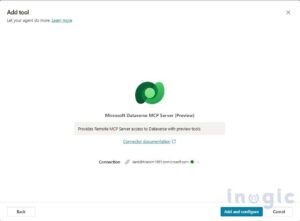
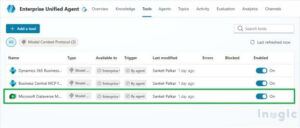
Step 2: An additional tool is needed to be added for ‘Microsoft Dataverse’ so the agent can retrieve records that are stored in it.

How to Build a Cross-System Copilot Agent in Dynamics 365 Using MCP Server

How to Build a Cross-System Copilot Agent in Dynamics 365 Using MCP Server

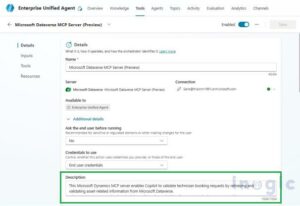
Add ‘Description’ for the tool as per the requirement:

How to Build a Cross-System Copilot Agent in Dynamics 365 Using MCP Server

Step 3: Add ‘Instructions’ to the agent as per the requirement:

How to Build a Cross-System Copilot Agent in Dynamics 365 Using MCP Server

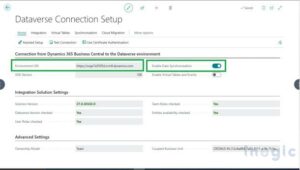
Step 4: Now we need to make a connection between ‘Microsoft Business Central’ and ‘Microsoft Dataverse’ by entering the environment URL and enabling the data synchronization so the copilot can access updated information from both systems.

How to Build a Cross-System Copilot Agent in Dynamics 365 Using MCP Server

How to Build a Cross-System Copilot Agent in Dynamics 365 Using MCP Server

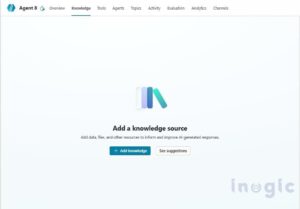
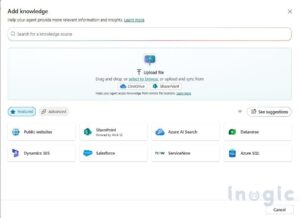
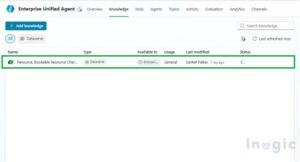
Step 5: Now we need to add Dataverse tables as knowledge sources, which will allow the Copilot to retrieve data from them whenever needed.

How to Build a Cross-System Copilot Agent in Dynamics 365 Using MCP Server

How to Build a Cross-System Copilot Agent in Dynamics 365 Using MCP Server

Necessary Tables are added as below:

How to Build a Cross-System Copilot Agent in Dynamics 365 Using MCP Server

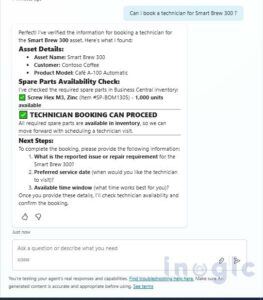
Step 6: Now the user asks a question regarding ‘Technician booking’, so the copilot retrieves the required information by using both Microsoft Dataverse and Microsoft Dynamics 365 Business Central to process the request and provide the response.

How to Build a Cross-System Copilot Agent in Dynamics 365 Using MCP Server

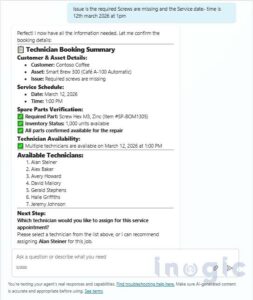
Step 7: The agent interacts with the user to collect required details such as:

  • Issue description
  • Service date and time

How to Build a Cross-System Copilot Agent in Dynamics 365 Using MCP Server

As you can see above, the copilot asks for the required details like the ‘Issue & service time’, then checks the system and schedules the technician accordingly

Scenario 3: Retrieve Instructions from Documents with SharePoint

In this scenario, the copilot accesses documents stored in SharePoint to answer user questions. It reads policies, guidelines, or reference files and provides the required instructions so users can quickly find the information they need.

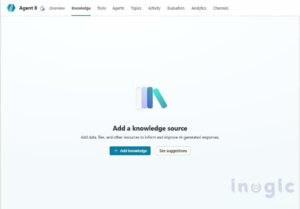
Step 1: To retrieve instructions, documents need to be added to Microsoft SharePoint.

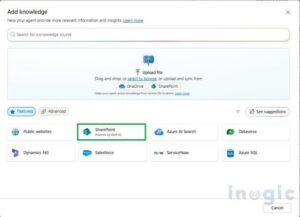
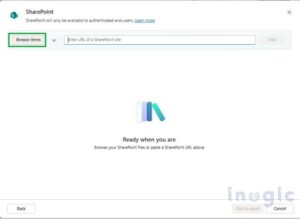
Step 2: To make these documents accessible, Microsoft SharePoint needs to be added as a knowledge source for the Copilot, as shown below

How to Build a Cross-System Copilot Agent in Dynamics 365 Using MCP Server

How to Build a Cross-System Copilot Agent in Dynamics 365 Using MCP Server

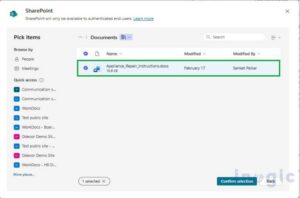
We need to upload the necessary ‘Documents’ to Microsoft SharePoint as below

How to Build a Cross-System Copilot Agent in Dynamics 365 Using MCP Server

How to Build a Cross-System Copilot Agent in Dynamics 365 Using MCP Server

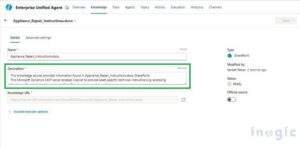
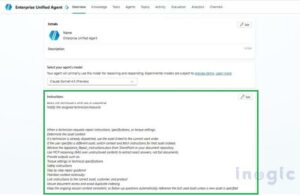
Step 3: ‘Descriptions’ and ‘Instructions’ need to be added to guide the agent on how and when it should use the document-based information during conversations.

How to Build a Cross-System Copilot Agent in Dynamics 365 Using MCP Server

How to Build a Cross-System Copilot Agent in Dynamics 365 Using MCP Server

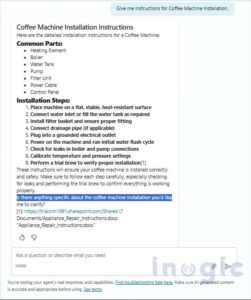
Step 4: Now the user needs to ask the agent questions that require information from documents in SharePoint.

How to Build a Cross-System Copilot Agent in Dynamics 365 Using MCP Server

As you can see above, the copilot searches the documents and shows the required instructions step by step based on the question.

Conclusion:

By the end of these 3 scenarios, the copilot grows from a simple blank agent into a smart assistant that can connect to different systems and help complete tasks. Instead of opening multiple apps like Business Central, Dataverse, or SharePoint, users can just ask the copilot and get the information they need in one conversation. This shows how a basic copilot can gradually become a powerful tool that not only answers questions but also helps get real work done faster.

FAQs

1. What is MCP Server in Microsoft Copilot?

MCP (Model Context Protocol) Server enables Copilot to interact with multiple systems using predefined tools instead of direct API calls. It standardizes how Copilot accesses and executes actions across platforms.

2. Can Copilot work across multiple Dynamics 365 applications?

Yes. With MCP Server, Copilot can interact with Business Central, Dataverse, and SharePoint within a single workflow, enabling cross-system execution.

3. How is MCP different from traditional API integrations?

APIs require custom integration logic, while MCP exposes standardized tools with predefined schemas, making it easier for Copilot to discover and use capabilities dynamically.

4. What are MCP tools in Copilot?

MCP tools are predefined actions (like retrieving data or updating records) that Copilot can invoke. Each tool represents a specific business capability exposed by a system.

5. Is MCP Server required for building advanced Copilot agents?

For cross-system and action-oriented Copilot scenarios, MCP Server is essential as it enables structured, secure, and scalable integrations.

The post How to Build a Cross-System Copilot Agent in Dynamics 365 Using MCP Server first appeared on Microsoft Dynamics 365 CRM Tips and Tricks.
Automate Order Processing: Connect Dynamics 365 CRM & Business Central with Co-pilot Sales Order Agent

Sales Order Agent

Imagine you run a business that gets dozens or hundreds of order requests via email every day from new clients or repeat customers. Normally, each request follows a long manual sequence – first reading the email, then validating customer details, checking item availability in inventory, preparing a quote, sending it to the customer, waiting for confirmation, and finally creating the sales order.
This step-by-step process is time-consuming, prone to errors, and consumes a significant amount of your team’s time.

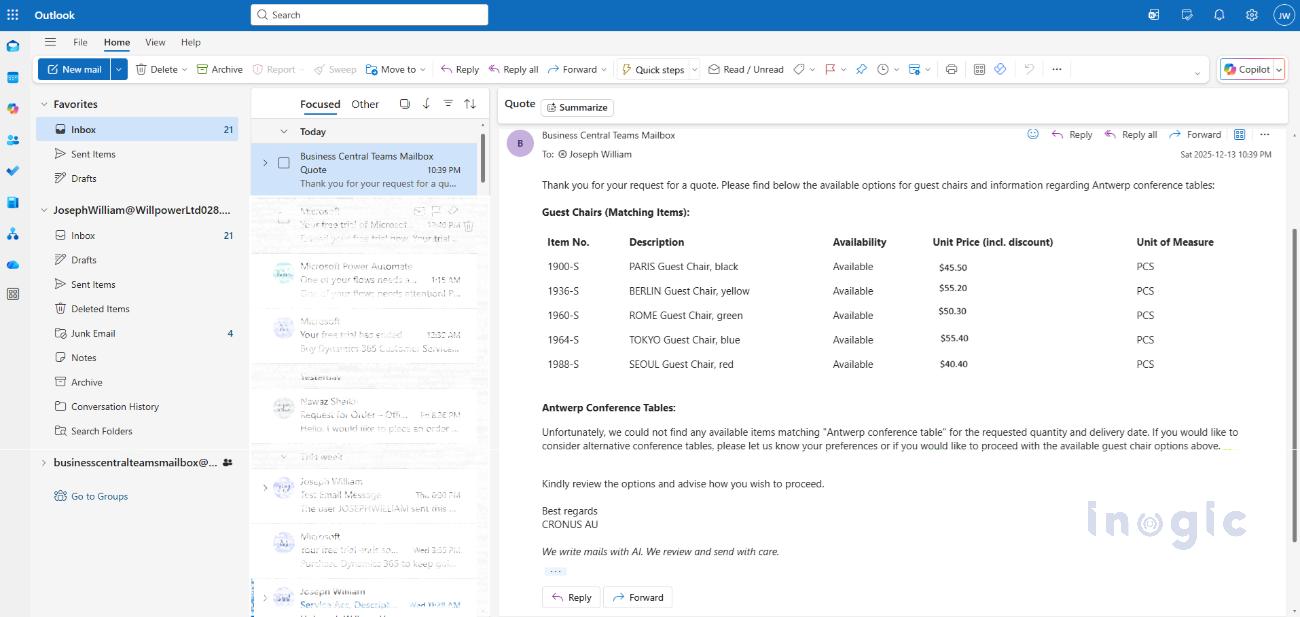
That’s where the Sales Order Agent in Dynamics 365 Business Central comes in. This AI-powered helper reads incoming customer emails, extracts order details automatically, checks inventory, drafts quotes or orders and much of it happens without manual data entry.

Use Case – Example Scenario

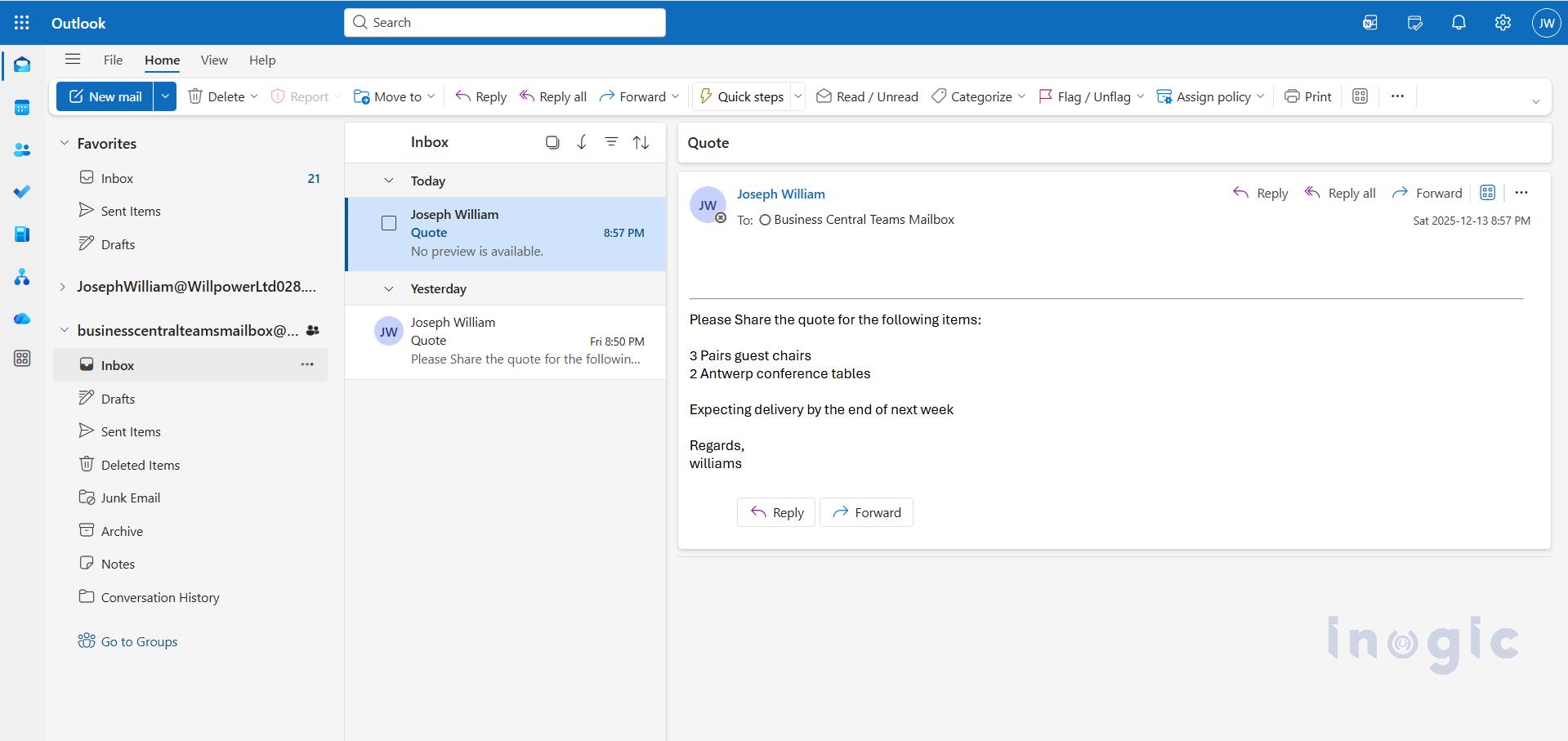
Imagine you run a small-to-medium distribution business. A customer sends an order request to your shared sales email:

“Please supply 50 units of Product A and 30 units of Product B – delivery within 15 days. PO #12345.”

Here’s how Sales Order Agent handles it:

  1. The Sales order agent monitor’s the email and spots new message within shared mailbox.
  2. It identifies the sender as one of your registered customers in Business Central.
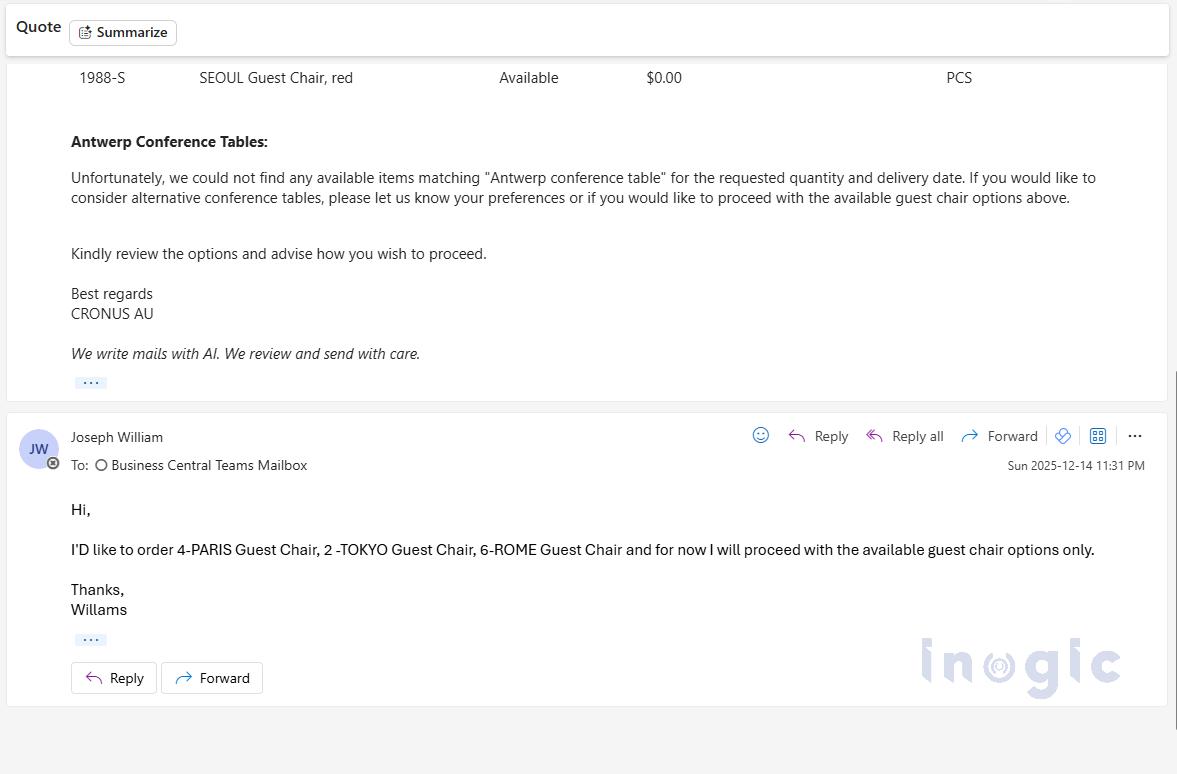
  3. It reads the email, extracts requested items and quantities. If any detail is missing (e.g. delivery address, product variant), the agent can ask follow-up questions via email.
  4. It checks inventory for the requested items and verifies availability.
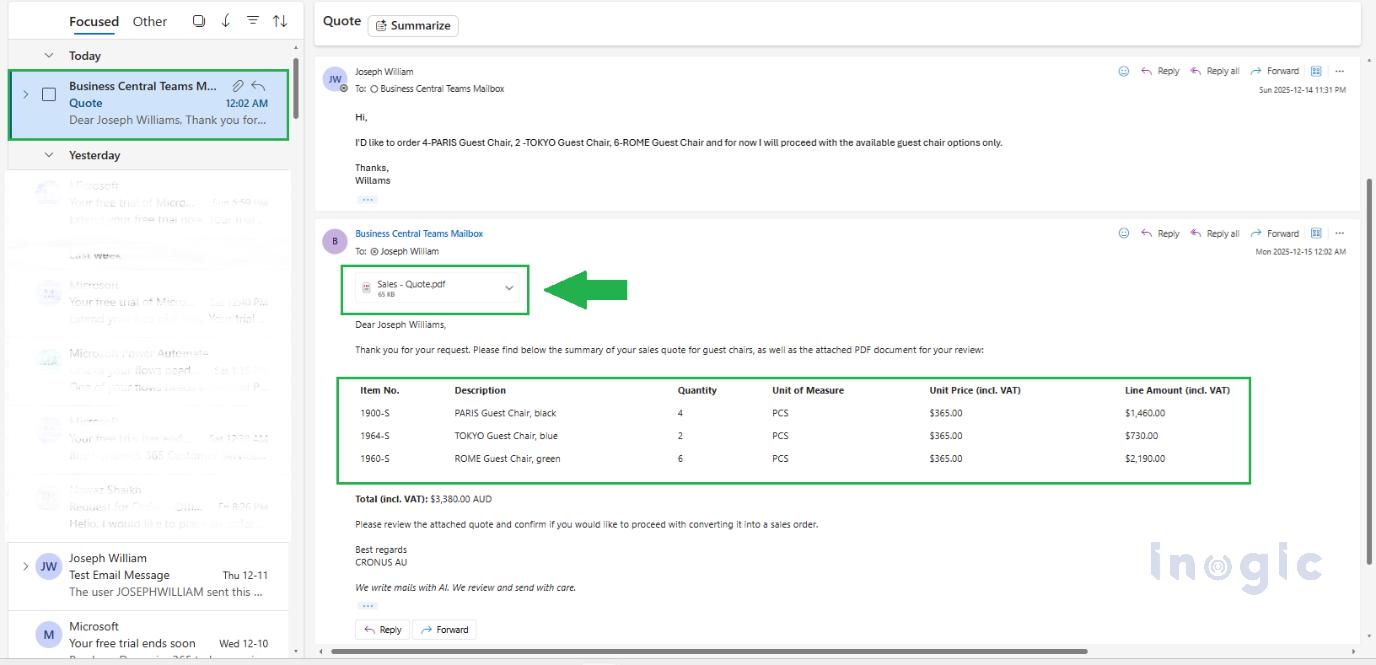
  5. The agent drafts a sales quote – with item details, prices, taxes, delivery dates and formats it as a PDF, and prepares it for customer approval.
  6. You or a team member reviews the quote in Business Central. If everything looks good, you approve and send it.
  7. Once the customer confirms, the agent automatically converts the quote into a sales order and emails confirmation to the customer by completing the process from email request to final order.

Steps to Configure Sales Order Agent

  1. Enable Prerequisites in Business Central

Before configuring the Sales Order Agent, ensure that Copilot and Agent capabilities are enabled in Business Central.

“These features are available starting from the 2025 Release Wave 2.”

Sales Order Agent

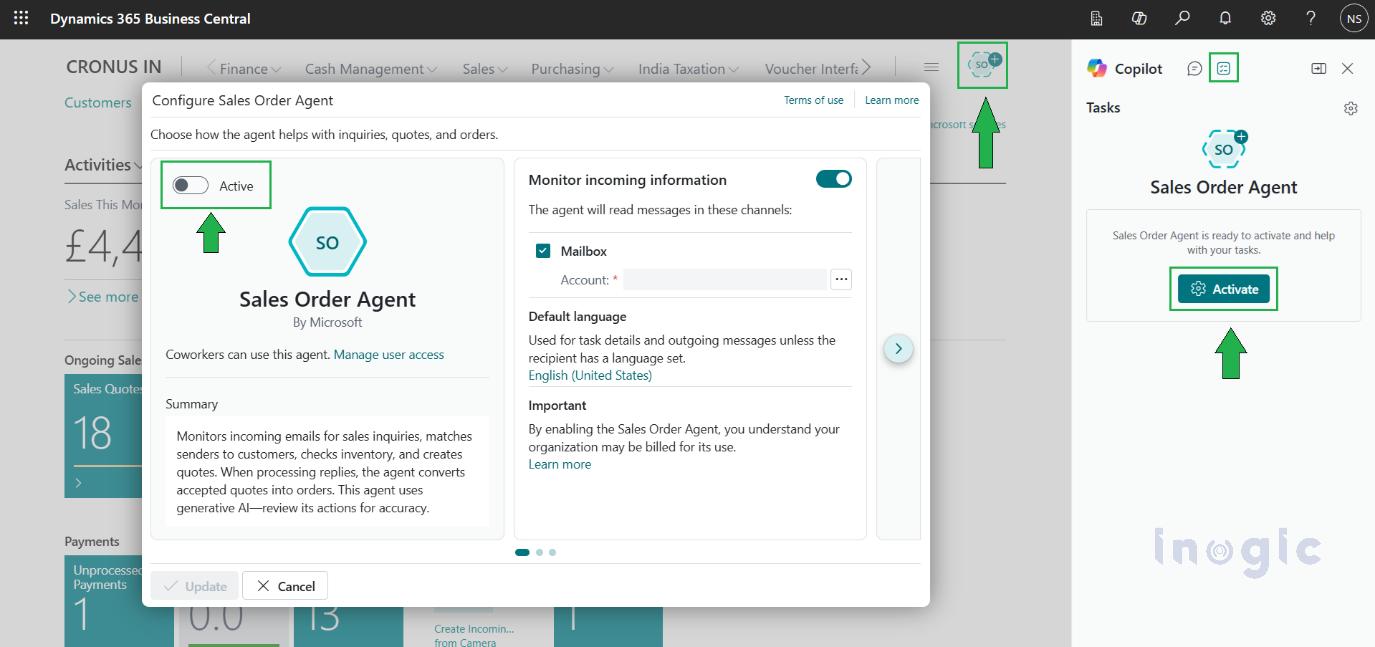
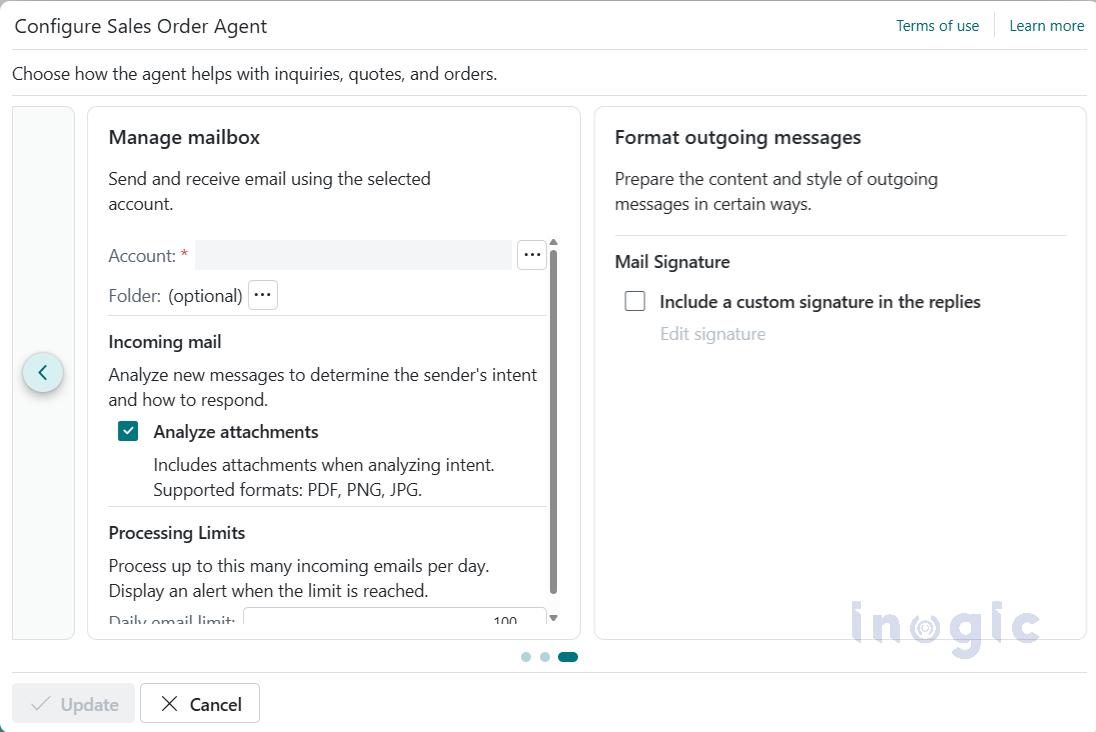
  • Activate Sales Order Agent

    Activating the Sales Order Agent allows Copilot to start reading incoming sales emails and assist with quotes and orders.

Key Options:

  • Activate Sales Order Agent:

Enables the agent to process incoming sales inquiries.

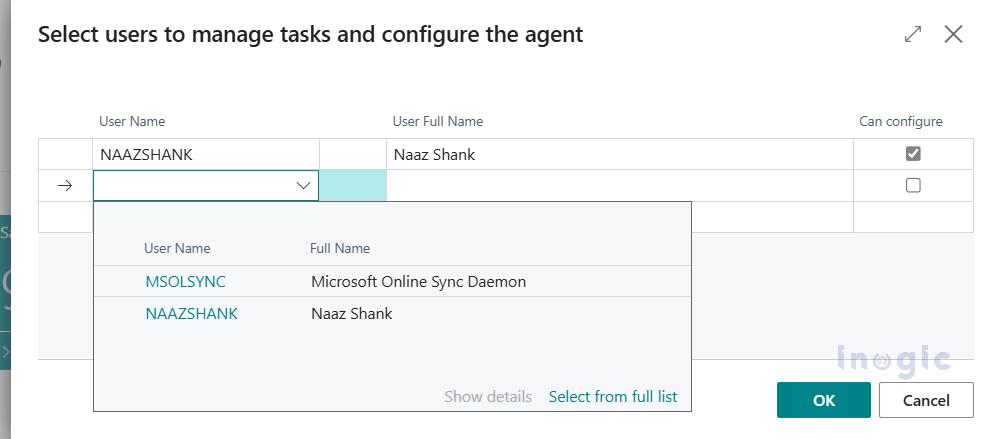
  • Manage User Access:

Define which users can view and interact with the Sales Order Agent.

Sales Order Agent

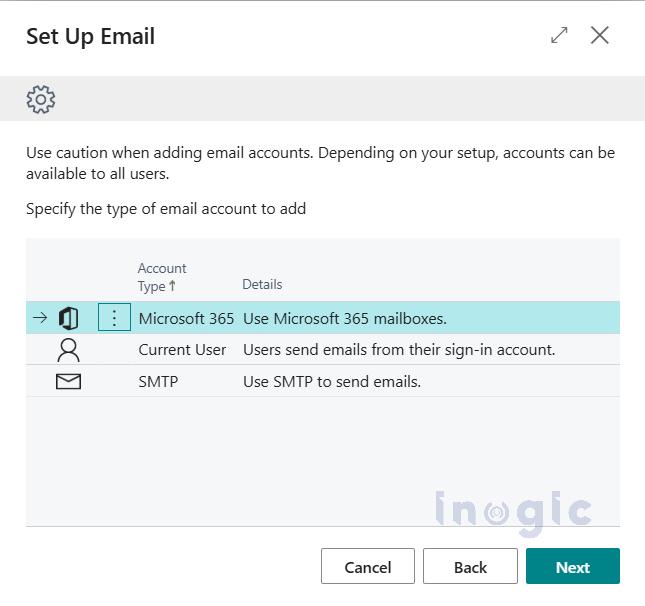
  • Monitor Incoming Information

Choose the mailbox the agent will monitor.

  • Microsoft 365 – Sends emails using your organization’s Microsoft 365 mailboxes.
  • Current User – Sends emails from the logged-in user’s own Business Central account.
  • SMTP – Sends emails through any external SMTP server you configure.

Sales Order Agent

  • Default language for responses

Set a default language for all AI-generated responses.

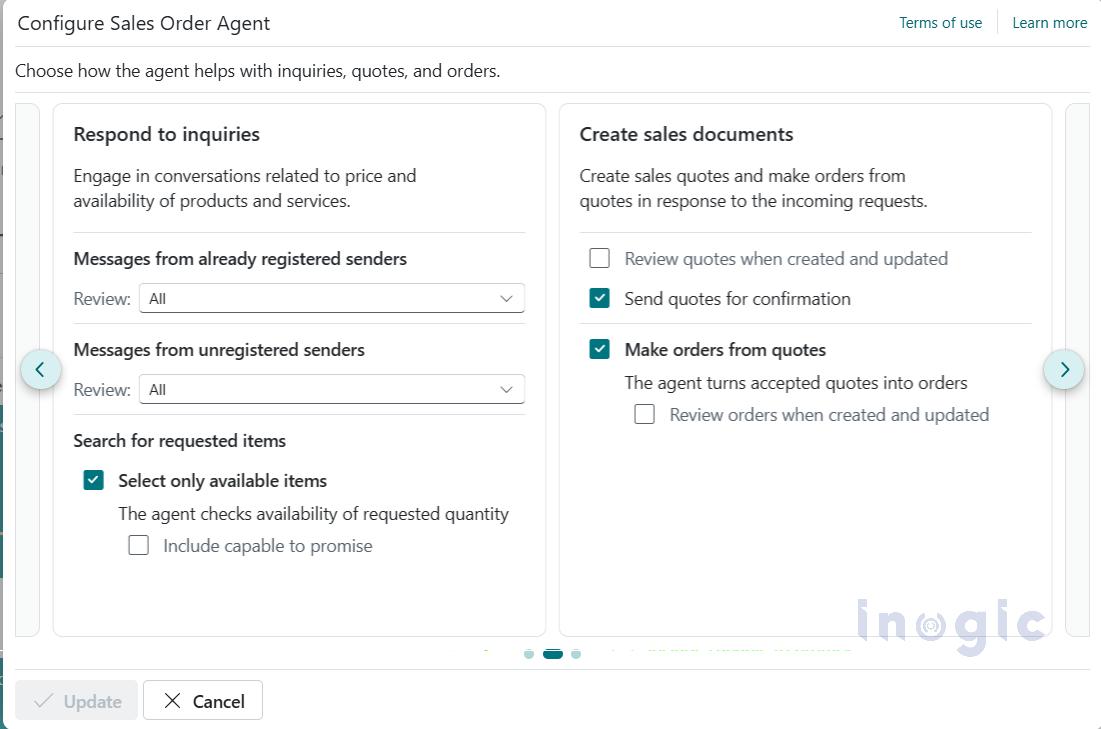
  1. Defining Agent Automation and Review Steps

Choose which actions the agent should perform automatically and where human review is required.

  • Respond to Inquiries

Controls how the agent responds to incoming inquiries, including:

  • Sender type (registered or unregistered)
  • Item availability checks
  • Create Sales Documents

Defines whether the agent:

  • Automatically creates sales quotes
  • Sends quotes for confirmation
  • Converts accepted quotes into sales orders
  • Requires user review before sending or creating documents

Sales Order Agent

  1. Configure the Mailbox

Specify a shared Microsoft 365 mailbox that the agent will monitor for incoming sales inquiries.

Sales Order Agent

  1. Activate the Agent

  • Once all the configuration is completed, turn on the agent.
  • Business Central’s internal email processor will then monitor the mailbox and trigger the agent whenever a new email arrives.

Sales Order Agent

  1. Monitor & Review

    Agent Activity

  • Use the “Copilot pane” or timeline view to see all actions the agent performs:
  • Quotes created
  • Orders generated
  • Emails drafted or sent
  • Record updates performed by the agent

You retain full visibility and control over all agent actions.

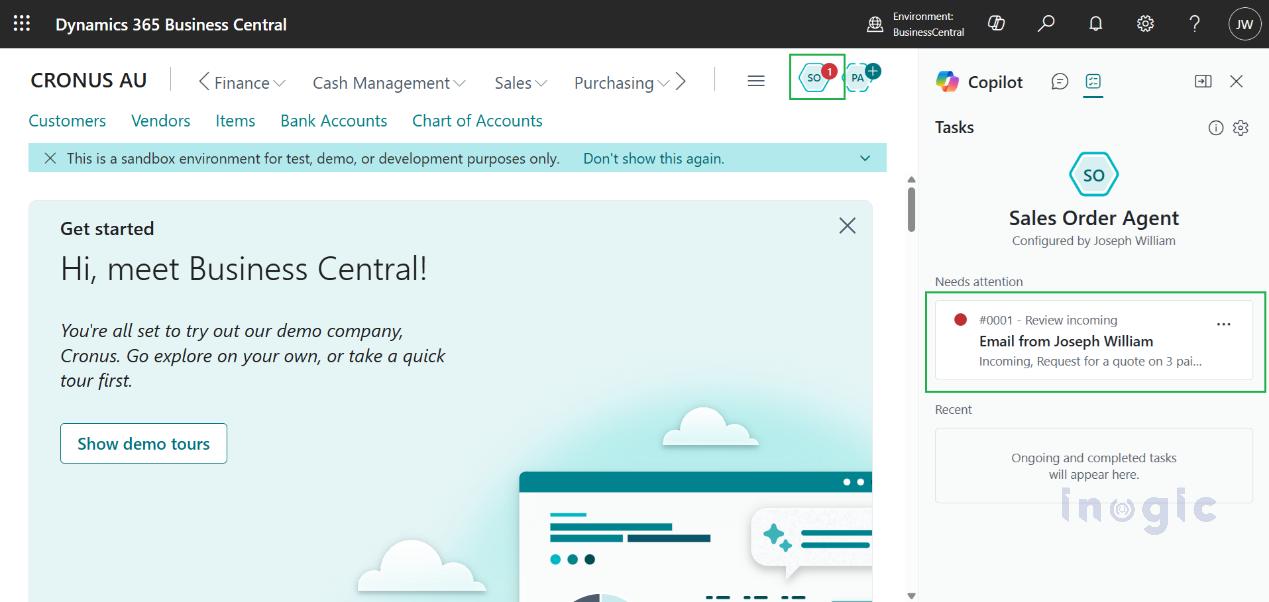
  • When Agent Receive/Reads the Mail:

Sales Order Agent

Note:

Verify that the configured mailbox is a valid Microsoft 365 (Exchange Online) mailbox, is accessible within the same tenant, has Full Access permissions assigned, and is properly connected in Business Central so the Sales Order Agent can read and send emails without access issues.

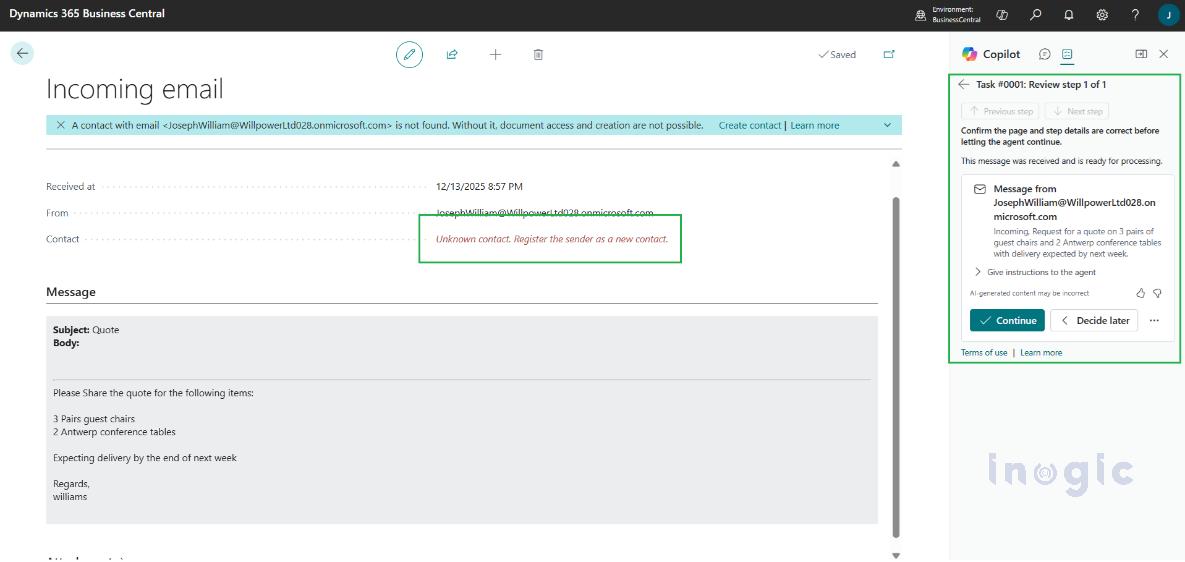
  1. When the Email Is Reviewed
  • The agent automatically checks whether the sender already exists in the database.

Sales Order Agent

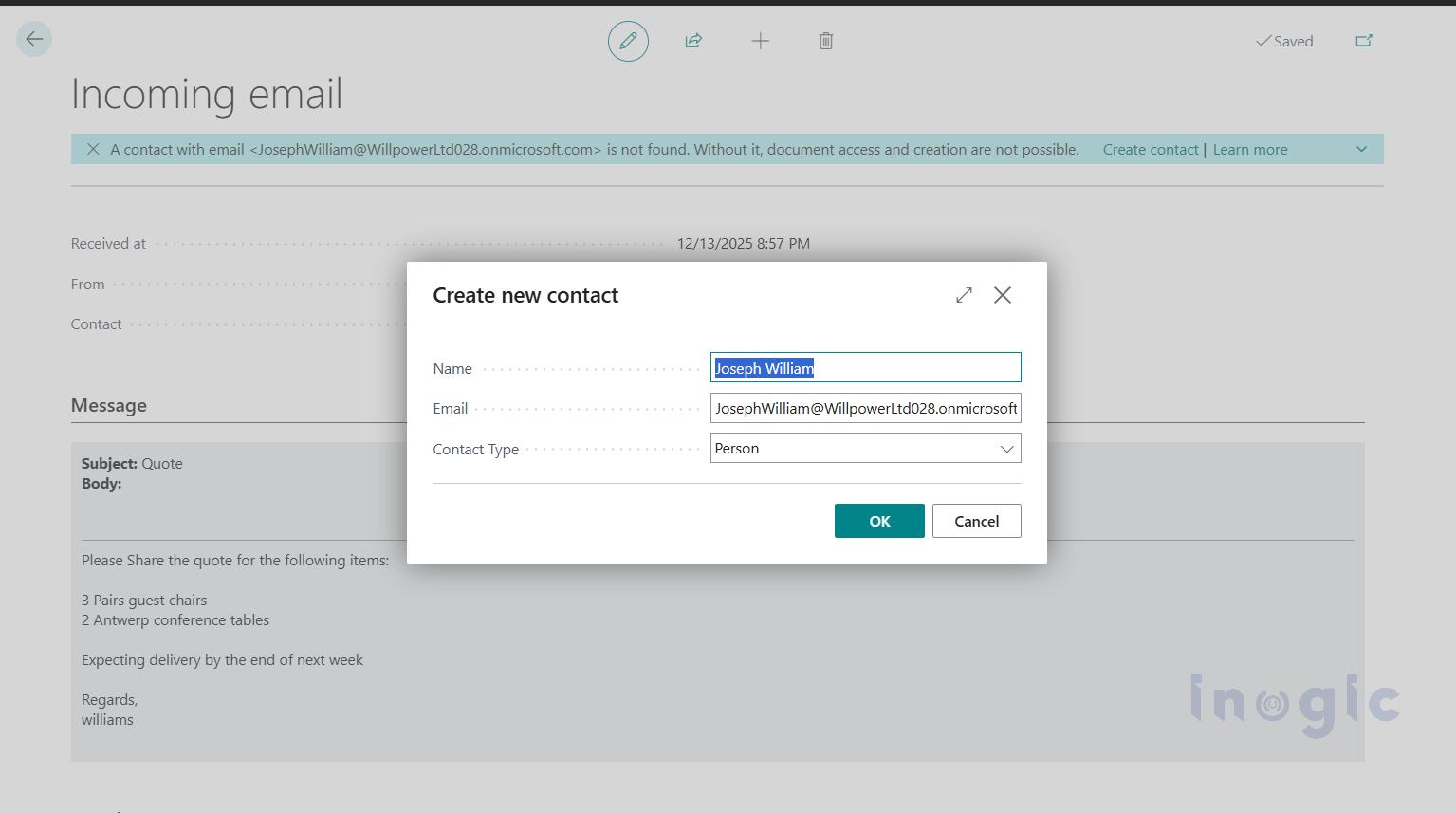
  • If the sender is not found, the agent allows the creation of a new contact.

Sales Order Agent

  1. After the Reviewing the Incoming Mail

After reviewing the Mail:

  • You can provide a custom prompt to guide the agent’s response, or
  • Click Continue, allowing the agent to automatically generate the Quote and draft or send the email.

Sales Order Agent

  1. Customer Responds with Required Details

The customer replies with all necessary information needed to finalize the quote, such as item confirmation, quantities, delivery preferences, or additional requirements.

Sales Order Agent

  1. Quote is reviewed by the user.

The Sales Order Agent prepares the quote, which is then reviewed by the salesperson to ensure pricing, availability, and terms are accurate.

Sales Order Agent

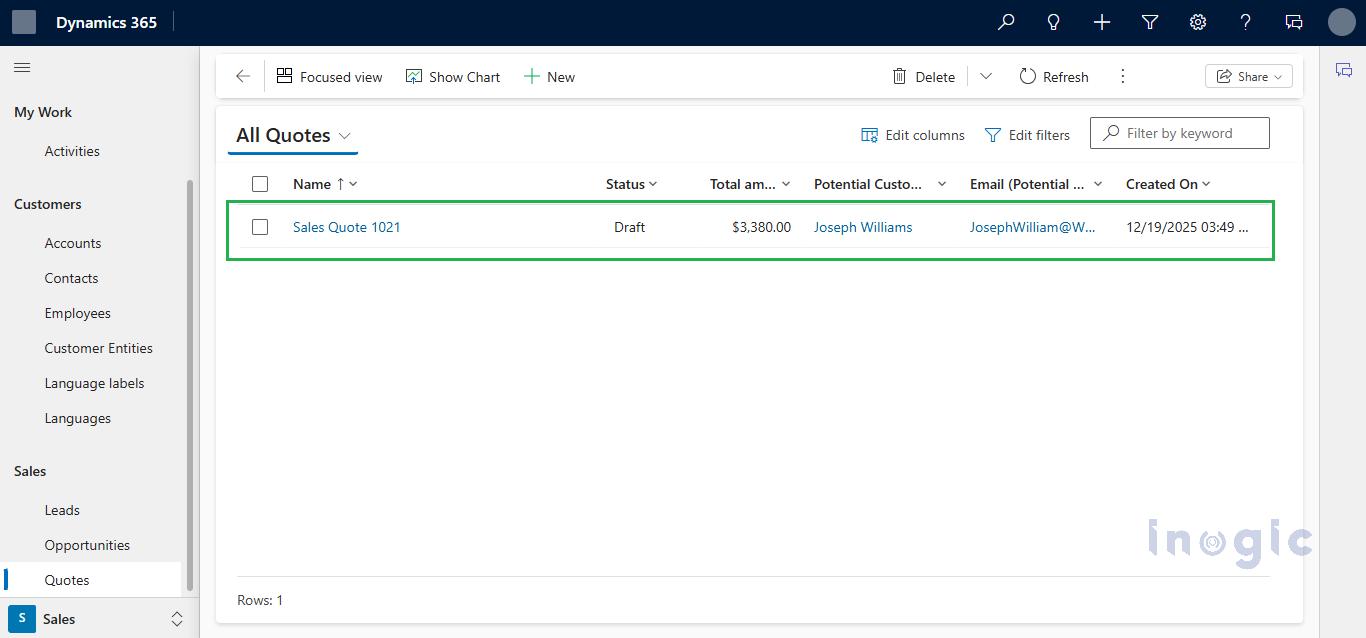
Quote Visibility in Dynamics 365 CRM (Sales)

At the same time, the quote is synchronized to Dynamics 365 CRM, ensuring sales teams have real-time visibility without switching systems.

When Dynamics 365 CRM (Sales) is integrated with Business Central, all sales documents created by the Sales Order Agent in Business Central are automatically synchronized and visible in CRM. Learn more about setting this up in Microsoft’s official documentation: Integrating Business Central with Dynamics 365 Sales. https://learn.microsoft.com/en-us/dynamics365/business-central/admin-prepare-dynamics-365-for-sales-for-integration

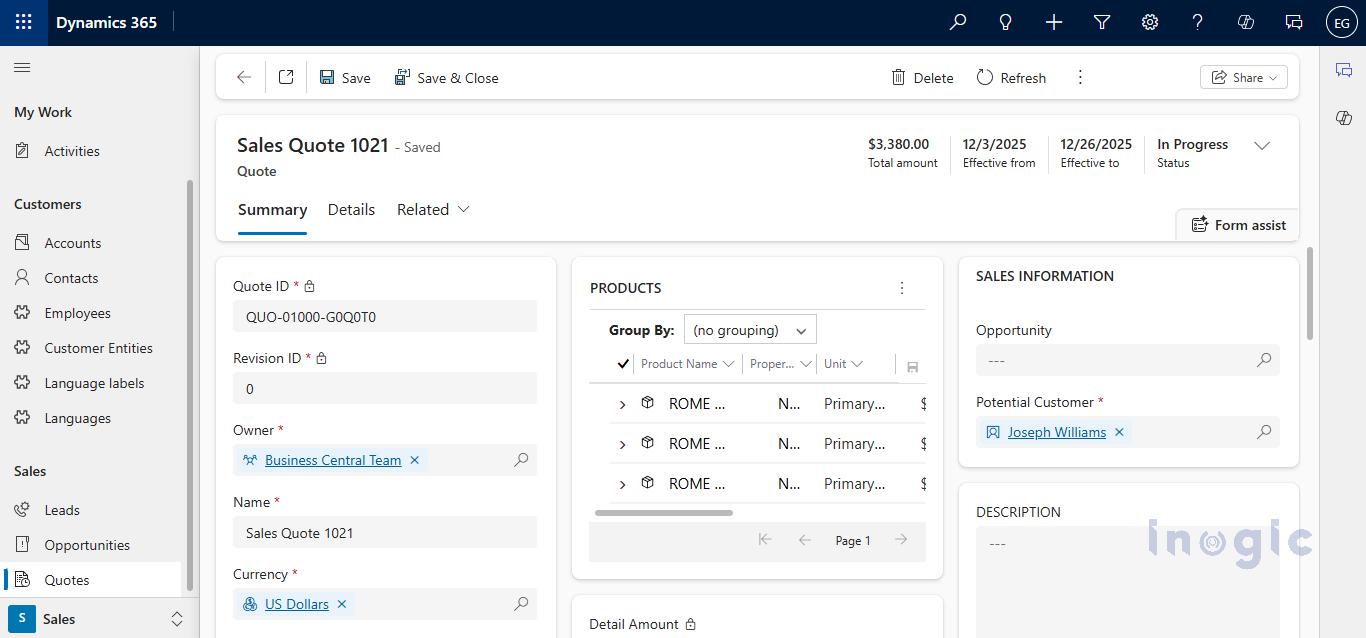
As soon as the Sales Quote is created in Business Central, it becomes available to CRM users in near real time through standard integration mappings. 

Sales Order Agent

Sales Order Agent

Once this integration is configured, any quote created by the Sales Order Agent in Business Central will be mirrored into CRM, giving sales teams near-real-time visibility without needing to switch applications

  1. Quote Send to Customer

After approval, the Sales Order Agent sends the finalized sales quote as a PDF to the customer via email.

Sales Order Agent

After Quote Confirmation
Once the customer approves the quote, the Sales Order Agent automatically converts it into a sales order and sends an order confirmation to the customer, completing the end-to-end sales process.

FAQs

1. What is the Sales Order Agent in Dynamics 365 Business Central?

The Sales Order Agent in Dynamics 365 Business Central is an AI-powered Copilot feature that automatically processes customer order requests received via email. It reads incoming emails, identifies customers, extracts order details, checks inventory availability, creates sales quotes, and converts approved quotes into sales orders with minimal manual intervention.

2. How does the Sales Order Agent create sales orders from emails?

The Sales Order Agent monitors a shared mailbox, analyzes incoming customer emails, extracts product and quantity information, validates customer records, checks inventory, and drafts sales quotes. Once the customer approves the quote, the agent automatically converts it into a confirmed sales order in Business Central.

3. Can Sales Order Agent work with shared mailboxes in Microsoft 365?

Yes, the Sales Order Agent supports shared Microsoft 365 (Exchange Online) mailboxes. The mailbox must be in the same tenant, properly connected to Business Central, and have Full Access permissions assigned for the agent to read and send emails.

4. Does Sales Order Agent require human approval before sending quotes or orders?

Sales Order Agent is configurable. Businesses can choose full automation or require human review before quotes are sent or orders are created. This ensures accuracy while maintaining control over pricing, availability, and customer communication.

5. What happens if the email sender is not an existing customer?

If the Sales Order Agent cannot find the sender in Business Central, it allows the user to create a new contact or customer record. Once created, the agent continues processing the request without interrupting the workflow.

Wrapping Up

Sales Order Agent transforms how businesses handle order processing converting a traditionally manual, time-consuming workflow into a fast, AI-driven automation. By reading customer emails, identifying customers, checking inventory, drafting quotes, and converting orders all with minimal human effort it speeds up the sales cycle, reduces errors and boosts productivity. And yet, it keeps your team in control, with full transparency and oversight.

If your business handles email-based orders regularly especially at scale integrating Sales Order Agent into Dynamics 365 Business Central can deliver significant efficiency gains and help you manage growth smoothly.

The post Automate Order Processing: Connect Dynamics 365 CRM & Business Central with Co-pilot Sales Order Agent first appeared on Microsoft Dynamics 365 CRM Tips and Tricks.

The Ultimate Guide to AI Semantic Search in SharePoint with Microsoft Copilot

AI-Powered SharePoint Knowledge Search with Copilot

Organizations generate thousands of documents across SharePoint, including contracts, invoices, proposals, technical specifications, HR files, SOPs, and more.

But finding the right document at the right moment is where the real challenge lies.

AI tools like Microsoft Copilot, when combined with modern semantic search and Azure AI Search, are reshaping how business users discover, understand, and use document-based knowledge—reducing search time from minutes to seconds.

Today’s blog explores the top Copilot features that enhance SharePoint document search and turn Microsoft 365 into a powerful, conversational knowledge hub.

Why Traditional SharePoint Search Falls Short

Keyword search was never designed for today’s volume of data. Users face issues like:

  • Difficulty locating the right version of a document
  • Missing results due to mismatched keywords
  • Time spent browsing long PDFs, contracts, and presentations
  • Inability to perform cross-document summaries
  • Limited contextual understanding

This is exactly where AI-powered SharePoint search changes everything.

How Copilot Enhances SharePoint Document Search

Copilot enables semantic, conversational, and intent-aware search across your SharePoint content.

Instead of typing keywords, users can simply ask:

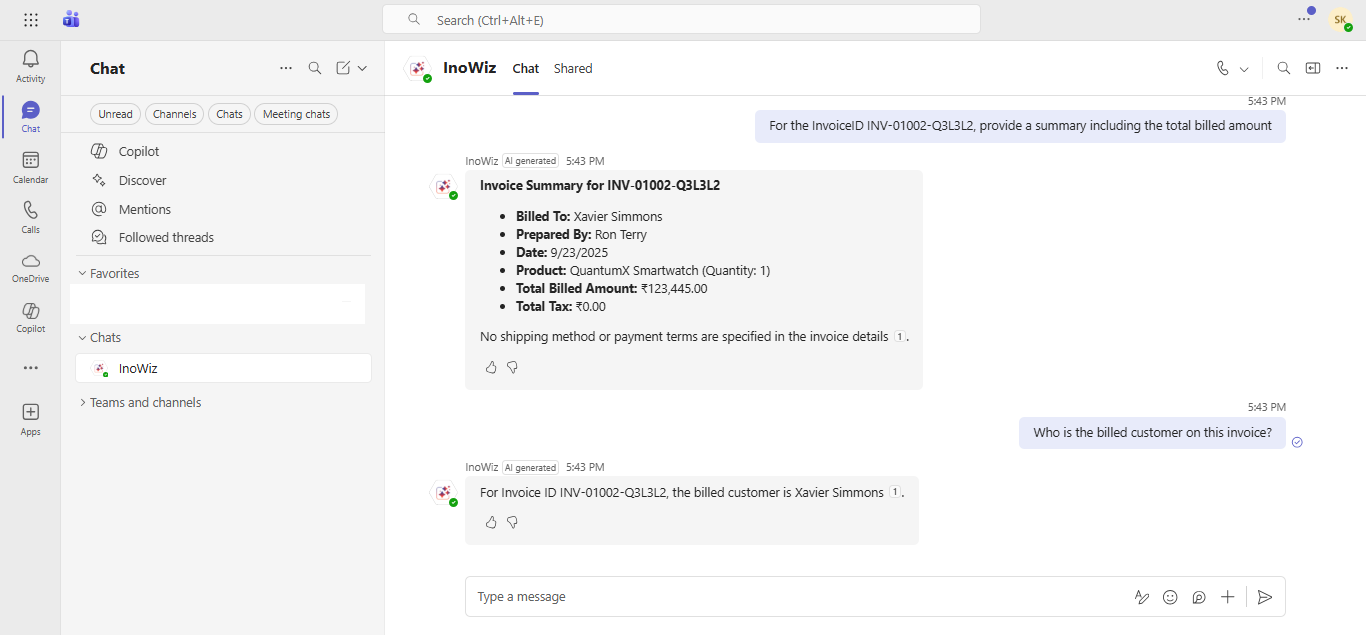
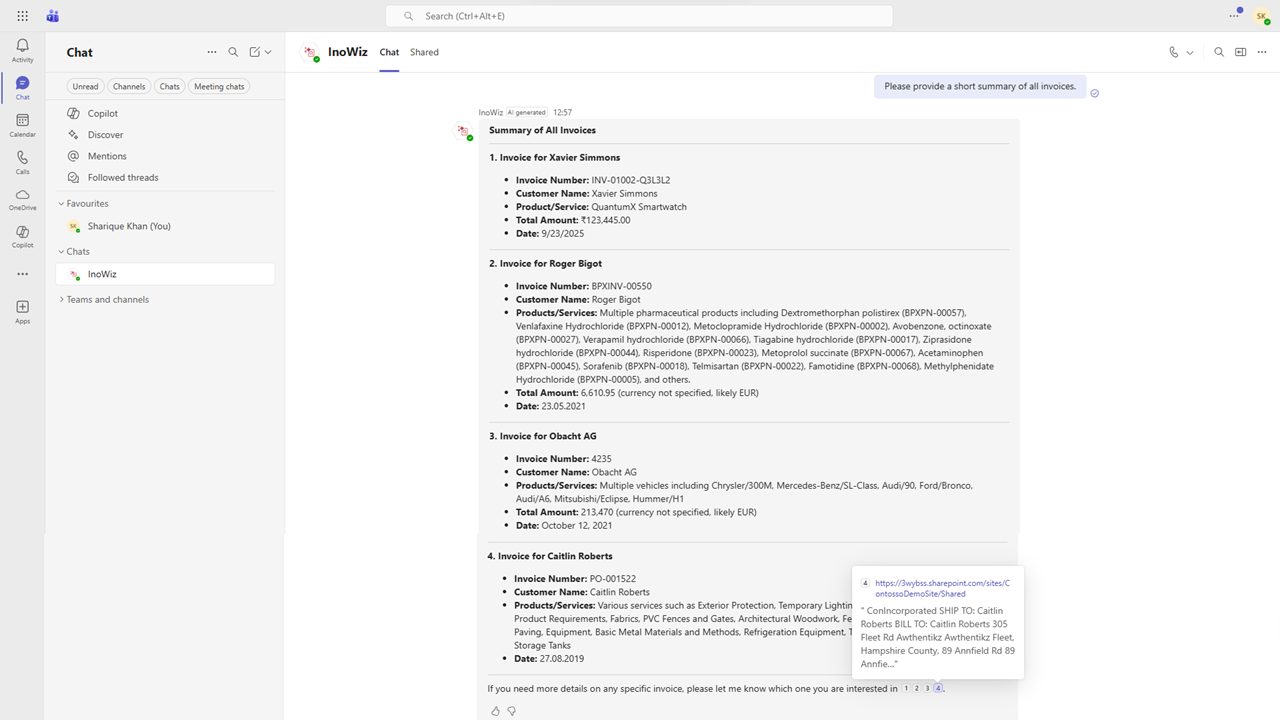
“Give me a short summary of all Q4 invoices stored in SharePoint.”
“Show me the risks mentioned in the contract signed with Contoso.”
“Provide the billing details for invoice INV-01002-Q3L3L2.”

And Copilot generates a clear, consolidated answer with citations within seconds.

AI Semantic Search in SharePoint with Microsoft Copilot

AI Semantic Search + Azure AI Search: The New Search Backbone

Behind the scenes, Copilot leverages:

  • Azure AI Search
  • Semantic Indexing for SharePoint
  • Intent understanding
  • Natural language query processing
  • Large-scale cross-document retrieval

The result? Copilot doesn’t just find documents; it understands their meaning.

Copilot in Microsoft Teams: Search Information Without Leaving the Call

During a live Teams call, users can ask:

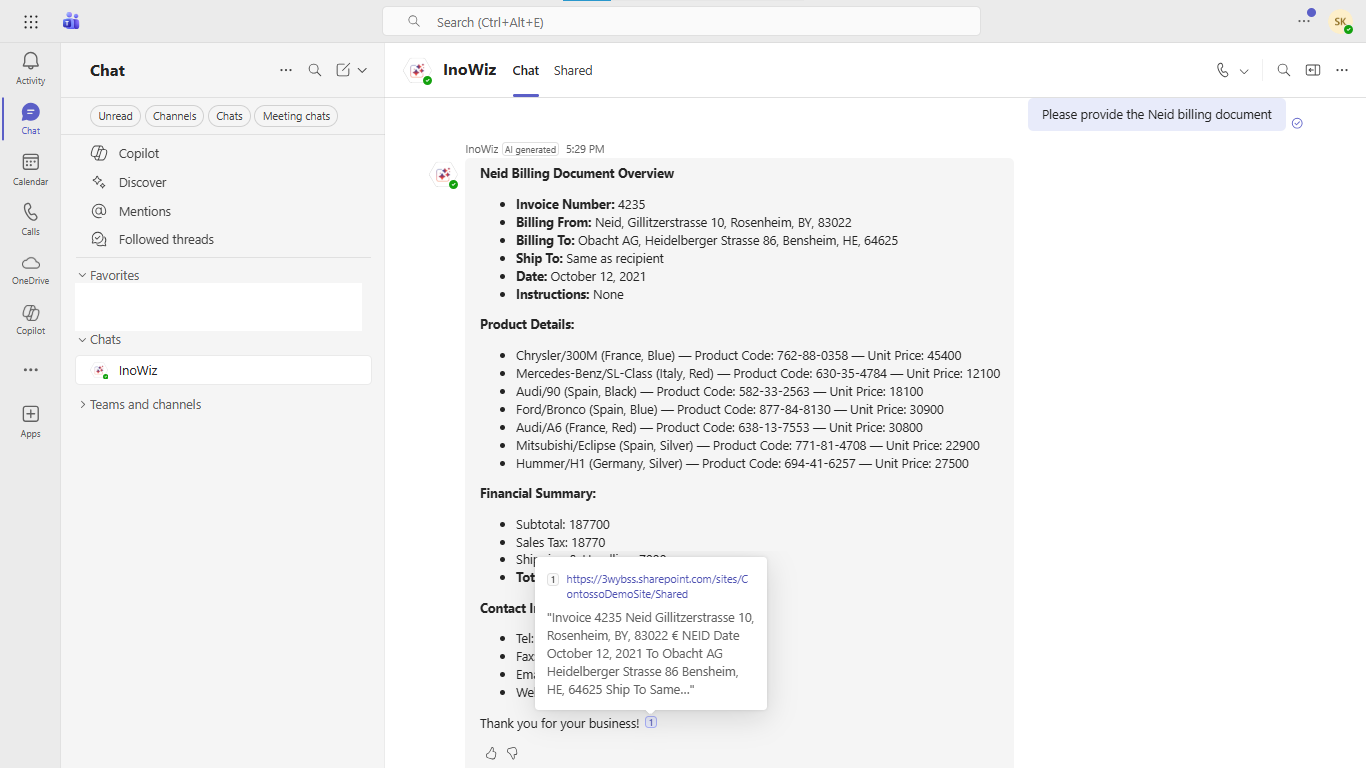
“Summarize the latest billing document for Project Neid.”
“Pull the contract details approved last week.”

Copilot instantly retrieves the relevant SharePoint content, even if it lives in a different site, library, or folder.

AI Semantic Search in SharePoint with Microsoft Copilot

This is especially impactful for:

  • Sales calls
  • Project discussions
  • Customer escalations
  • Leadership reviews

Copilot in SharePoint: Ask Questions, Get Answers

Inside SharePoint, Copilot acts as a knowledge assistant.

You can ask:

“Provide insights from all technical design specs related to the Q3 rollout.”

And Copilot responds with synthesized insights instead of links to browse manually.

Copilot for Outlook & Dynamics 365: Enterprise Search Everywhere

The power of SharePoint search doesn’t stay in SharePoint.

Copilot brings AI search to:

  • Outlook → Draft emails based on SharePoint documents
  • Dynamics 365 CRM → Pull summaries when interacting with customers
  • Power Apps → Enable document intelligence in custom apps

This ensures knowledge is available wherever users work.

Conversational & Context-Aware SharePoint Search

With context retention, users can ask follow-up questions:

“For invoice INV-01002-Q3L3L2, what is the total billed amount?”
“Now show me the breakdown of line items.”

Copilot understands the topic you’re referring to and maintains continuity—just like a human assistant.

AI Semantic Search in SharePoint with Microsoft Copilot

Cross-Document Understanding & Smart Citations

Copilot scans multiple SharePoint files at once and produces:

  • Summaries
  • Insights
  • Bulleted explanations
  • Comparisons
  • Consolidated reports

Every answer includes citations to the exact SharePoint files used—ensuring transparency and auditability.

Example:

“Provide a short summary of all invoices.”

Copilot reviews every invoice document and returns a single, clean summary with links.

AI Semantic Search in SharePoint with Microsoft Copilot

Secure Search with SharePoint Permissions

Copilot respects SharePoint’s native permission model.
Users only see results they have access to.

Example:

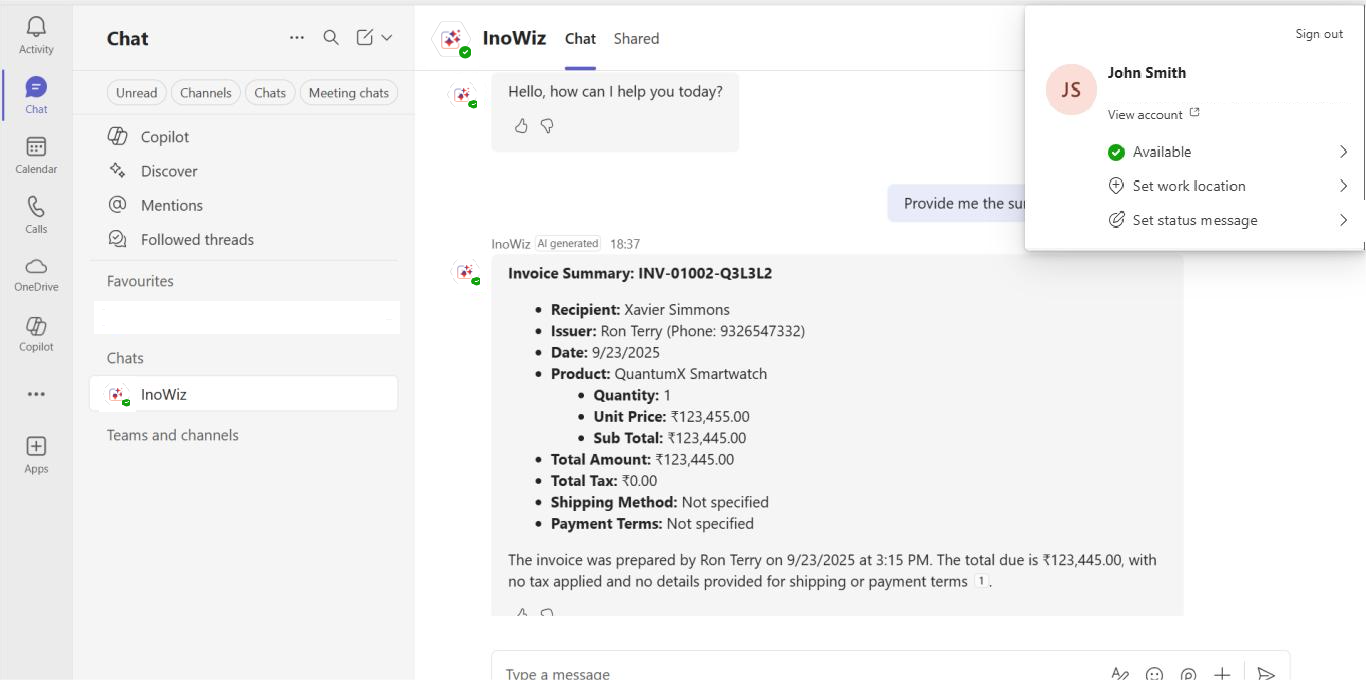
  • John has access → Copilot retrieves invoice INV-01002-Q3L3L2
  • Jonas doesn’t have access → Copilot shows nothing

This ensures compliance, security, and privacy without any manual configuration.

AI Semantic Search in SharePoint with Microsoft Copilot

AI Semantic Search in SharePoint with Microsoft Copilot

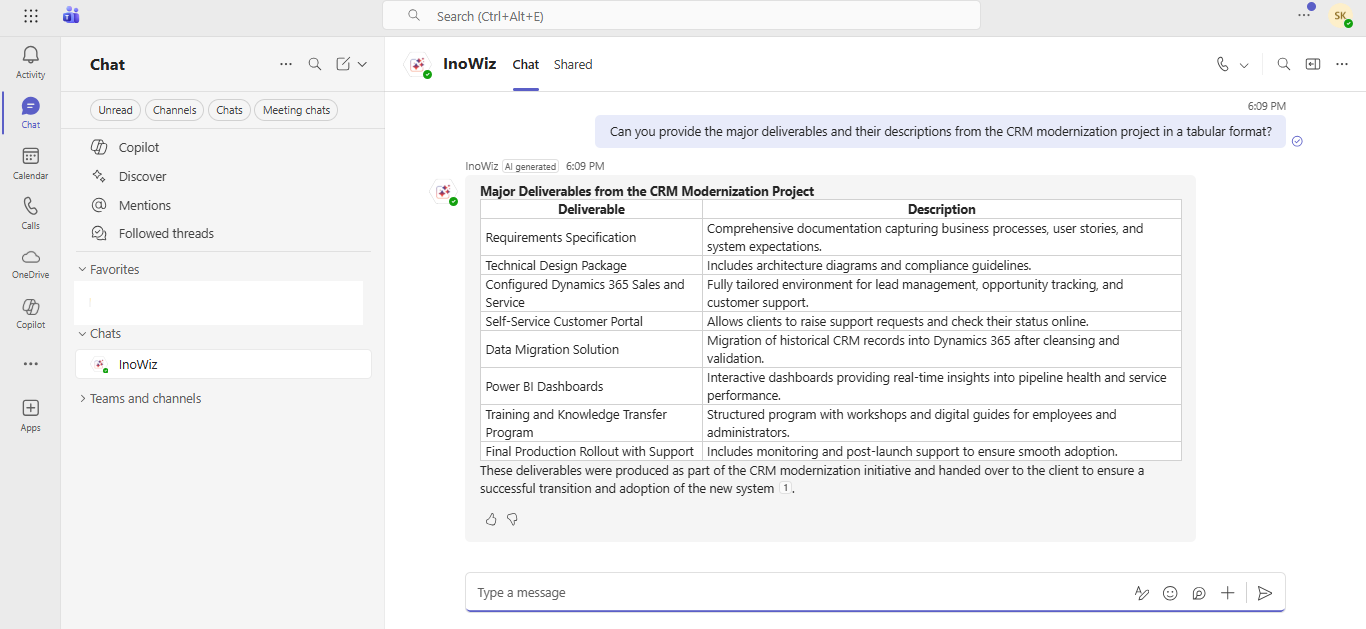
Tabular AI Responses for Faster Decision-Making

Copilot can convert extracted information into instant tables:

  • Invoice lists
  • Contract comparison columns
  • Risk matrices
  • Billing breakdowns
  • Metadata summaries

This helps teams analyze data quickly without manually formatting spreadsheets.

AI Semantic Search in SharePoint with Microsoft Copilot

Multi-Language Search for Global Teams

Copilot supports multilingual semantic search, ideal for organizations across:

  • India
  • Australia
  • Europe
  • Middle East
  • North America
  • Any

Users can query and receive answers in their native languages, boosting collaboration and accessibility.

AI Semantic Search in SharePoint with Microsoft Copilot

AI-Powered Email Drafting Based on SharePoint Content

A standout capability:

Copilot can generate professional email drafts using insights from the documents you reference.

Example:

“Draft an email to the finance team summarizing invoice INV-01002-Q3L3L2.”

Copilot instantly produces a polished draft you can send from Outlook.

AI Semantic Search in SharePoint with Microsoft Copilot

Why Combine Copilot + Azure AI Search + SharePoint + Teams/Outlook/Dynamics 365?

Because together, they deliver:

  • Faster decision-making
  • Reduced manual search effort
  • Instant knowledge extraction
  • Secure, permission-trimmed results
  • Modern AI-driven enterprise search experience
  • Cross-document intelligence

This combination transforms SharePoint from a storage system into a smart corporate brain.

Conclusion

Copilot is redefining SharePoint search by layering semantic intelligence, natural language understanding, and AI summarization across Microsoft 365.
From Teams calls to SharePoint libraries and Outlook emails, AI-powered search is becoming the default way organizations find information.

The future of SharePoint is conversational, semantic, real-time, and AI-driven.

Ready to Enhance Your SharePoint Search with AI?

If you want to implement AI-driven semantic search, Copilot-driven document insights, and enterprise-grade, permission-aware knowledge discovery, request a personalized walkthrough.

For more details, visit the Inogic Website or Microsoft Marketplace.

Reach us at crm@inogic.com to get a demo of Copilot-powered SharePoint document search (AI-based).


The post The Ultimate Guide to AI Semantic Search in SharePoint with Microsoft Copilot first appeared on Microsoft Dynamics 365 CRM Tips and Tricks.

How Copilot Studio Leverages Deep Reasoning for Intelligent Support Operations

CopilotStudio

Deep Reasoning in Microsoft Copilot Studio enables AI agents to analyze multi-step support scenarios, evaluate historical case data, apply business rules, and recommend well-reasoned actions similar to how an experienced support specialist thinks.

AI agents are becoming a core part of customer service operations, but traditional conversational models often struggle when scenarios become complex, like diagnosing a multi-step issue, understanding multi-turn case histories, or recommending the next best action.
Microsoft’s new Deep Reasoning capability in Copilot Studio (currently in preview) bridges this gap by enabling agents to think more logically and deliver more accurate conclusions.

This feature equips Copilot agents with advanced analytical abilities similar to how a skilled support specialist breaks down a problem, evaluates evidence, and suggests well-reasoned actions.

How Deep Reasoning Works

Deep reasoning is powered by an advanced Azure OpenAI model (o3), optimized for:

  • Multi-step thinking
  • Logical deduction
  • Complex problem solving
  • Chain-of-thought analysis
  • Context comprehension across long conversations

When enabled, the agent automatically decides when to invoke the deep reasoning model, especially during:

  • Complicated queries
  • Multi-turn conversations
  • Tasks requiring decision making
  • Summaries of large case files
  • Applying business rules

Alternatively, you can instruct the agent to explicitly use deep reasoning by including the keyword “reason” in your agent instructions.

Business Use Case:

Imagine a company that manages thousands of service cases, technical issues, warranty requests, customer complaints, and product inquiries.
Handling these efficiently requires deep understanding of:

  • Historical case data
  • Case descriptions across multiple interactions
  • Dependencies (products, warranties, previous repairs, SLAs)
  • Business rules
  • Customer communication patterns

A standard AI model can answer simple questions, but when a customer or sales representative asks something like:

  • Why was this customer’s case reopened three times?
  • Given the reported symptoms and past activity, what should be the next troubleshooting step?
  • Which SLA should be applied in this situation, and what is the reasoning behind it?
  • Considering the notes from all three departments, what appears to be the underlying root cause?

Your agent needs more than a direct lookup.
It needs reasoning.

This is where Deep Reasoning dramatically improves the experience.

How to Enable Deep Reasoning in Copilot Studio (Step-by-Step)

Setting up deep reasoning in a Copilot Studio agent is straightforward:

Step 1. Enable generative orchestration

This allows the agent to decide intelligently which model should handle each part of the conversation.

Step 2. Turn on Deep Reasoning

When enabled, the o3 model is added to the agent’s orchestration pipeline.

CopilotStudio

Step 3. Add the reason keyword (optional but recommended)

Inside the Agent Instructions, specify where deep reasoning should be applied:

As mentioned in the screenshot below, the word “reason” is used twice to trigger deep reasoning in our custom agent.

CopilotStudio

Step 4. Connect data sources

You can link multiple sources such as:

  • Dataverse Cases table
  • Knowledge bases
  • SharePoint documents
  • Product manuals
  • Troubleshooting guides

Deep reasoning enables the agent to interpret and analyze these materials more effectively.
For this example, I connected a Dataverse MCP server to provide the agent with improved access to Dataverse tables.

CopilotStudio

Step 5. Test complex scenarios

Ask real-world questions like:

  • Analyze the case history and determine the most likely root cause.
  • Based on the customer’s issue description, what steps should the technician take next?
  • Explain why this case breached SLA.

You will notice the agent provides a structured, logical answer rather than surface-level information.

CopilotStudio

You can also verify that deep reasoning was activated by checking the Activity section.

CopilotStudio

Frequently Asked Questions About Deep Reasoning in Copilot Studio

What model powers Deep Reasoning in Copilot Studio?
Deep Reasoning is powered by the Azure OpenAI o3 reasoning model, optimized for multi-step analysis and logical deduction.

When should Deep Reasoning be used?
It should be applied to complex, multi-turn conversations involving business rules, SLAs, historical data, or decision-making.

Does Deep Reasoning replace standard Copilot responses?
No. Copilot Studio dynamically decides when Deep Reasoning is required, using standard models for simpler interactions.

Can Deep Reasoning analyze large case histories?
Yes. It is specifically designed to interpret long conversations and large volumes of contextual data.

Conclusion

By connecting rich data sources and enabling deep reasoning, the agent becomes significantly more capable of understanding complex case scenarios and providing meaningful, actionable responses. When tested with real-world questions, the agent demonstrates structured analysis, logical decision-making, and deeper insights rather than surface-level replies.

This ensures more accurate case resolutions, improved productivity, and a smarter, more reliable support experience.

The post How Copilot Studio Leverages Deep Reasoning for Intelligent Support Operations first appeared on Microsoft Dynamics 365 CRM Tips and Tricks.

Meet MapCopilot — Your AI-Powered Geo-Mapping Companion for Dynamics 365

Inogic - MapCopilot Maplytics

In the modern digital landscape, data visualization and spatial intelligence are central to effective decision-making. Maps no longer just display locations, but

  • interpret business movement,
  • drive smarter workflows, and
  • enable teams to act faster

Introducing MapCopilot, the latest innovation from the glorious Maplytics suite, designed for users of Microsoft Dynamics 365 and Dataverse who want to enjoy intelligent geo-mapping without the manual setup.

With MapCopilot, users no longer need to work with complex filters, remember specific map configurations, or toggle between tools. Instead, they can type or speak natural-language queries, such as:

“Show all active customers within 10 miles of downtown Chicago.”

AI-Powered Geo-Mapping Companion for Dynamics 365

Within seconds, MapCopilot interprets the prompt, applies the right filters, and displays a fully interactive map or optimized route, all within Dynamics 365.

Whether it’s plotting locations, performing proximity analysis, or designing efficient travel routes, MapCopilot transforms spatial data into actionable intelligence, making CRM navigation simpler, faster, and conversational.

Why MapCopilot Matters?

For most CRM users, performing spatial tasks, such as identifying nearby clients, analyzing data classifications, or optimizing routes, can involve multiple steps and configurations. Even with the powerful capabilities of Maplytics, some users prefer a more intuitive, quick, “ask-and-act” experience.

That’s where MapCopilot steps in. It eliminates manual input, reducing the effort to a single, human-like interaction.

Here’s how it transforms the experience:

  • Fewer clicks, faster output: Ask “Find open opportunities within 15 km of my location” and get results instantly plotted.
  • AI-powered understanding: Natural-language queries are converted into accurate mapping instructions without technical know-how.
  • Integrated within Dynamics 365: No third-party navigation or switching of apps is required. MapCopilot works natively inside your CRM.

As a result, teams spend less time configuring and more time analyzing, planning, and executing.

Key Capabilities of MapCopilot

  1. Conversational Mapping via Natural Language

With MapCopilot, maps become conversational. There’s no need to remember commands, syntax, or settings. You can simply type or speak what you need, and the AI interprets your intent.

Example commands:

  • “Show all leads by industry within 5 km of New York City.”

AI-Powered Geo-Mapping Companion for Dynamics 365

  • “Plan an optimized route for these five accounts.”
  • “Find gas stations near ABC Corporation.”

This conversational design ensures every team member, regardless of technical background, can instantly gain spatial insight without relying on a GIS expert or admin.

  1. Simplified Proximity and Radius Search

Forget manual setup for proximity analysis. You can now ask questions like:

“Show accounts within 5 miles of Nancy Thiel & Sons.”

MapCopilot automatically identifies the location, calculates distance, and displays relevant records complete with radius visualization and travel time estimates.

This capability is especially valuable for sales and service teams who frequently look for nearby leads, prospects, or assets to maximize daily coverage.

  1. Route Optimization That Saves Time & Cost

Efficient travel planning is at the heart of field operations. MapCopilot makes this effortless.

Simply specify your destinations, or just ask, and the assistant builds the shortest, most efficient route, considering real-world factors like travel distance, stop sequence, and accessibility.

AI-Powered Geo-Mapping Companion for Dynamics 365

Resulting benefits include:

  • Reduced travel time and fuel expenses
  • Increased customer visits per day
  • Improved productivity for every field rep
  1. Points of Interest (POI) Location

MapCopilot goes beyond CRM data. It helps users identify Points of Interest (POI) Locations like airports, restaurants, repair shops, or gas stations around any given area, enhancing travel convenience and opportunity identification.

AI-Powered Geo-Mapping Companion for Dynamics 365

  1. Work from Anywhere, Anytime

With distributed teams becoming the norm, MapCopilot ensures that location intelligence stays with you on the move.
Its native integration with Microsoft Dynamics 365 allows users to access mapping data, optimized routes, and analytical insights from any device, anytime.

AI-Powered Geo-Mapping Companion for Dynamics 365

  1. Context-Aware Conversations

Unlike standard assistants that reset after each query, MapCopilot maintains context awareness.

Start with:

“Plot all opportunities in California.”
Then continue with:
“Now show only those with revenue greater than $10,000.”

MapCopilot remembers your previous query, applies filters dynamically, and refines the visualization, ensuring a smooth, conversational workflow.

Technical Framework and Integration

MapCopilot is built on the Maplytics framework, powered by Azure OpenAI and tightly integrated with Microsoft Dynamics 365 and Dataverse.

Key integration highlights:

  • Embedded directly inside the Maplytics interface in Dynamics 365.
  • No need for third-party apps or extensions.
  • Fully compatible with web, tablet, and mobile experiences.
  • Optimized for fast rendering using Dynamics 365 map panels.

From installation to execution, the setup process is streamlined and ready to use. Once Maplytics is deployed, MapCopilot becomes immediately accessible to all licensed users.

Real-World Application Scenarios

Field Sales Optimization

A regional sales manager can quickly ask:

“Show all open service leads within 50 kilometers of our warehouse.”
“Now optimize the route for visiting them.”

MapCopilot instantly visualizes the results, color-codes them by priority, and generates the most efficient travel path.

This eliminates manual scheduling and lets teams focus on closing deals, not plotting maps.

Results organizations have seen:

  • Up to 20% reduction in transportation costs
  • 30% shorter travel routes
  • 40% faster decision-making through map visualizations

Customer Service & Field Support

Service dispatchers can instantly locate nearby technicians or customer sites by asking:

“Find available engineers within 10 miles of the reported service location.”

MapCopilot identifies suitable resources and even helps auto-schedule the task through Maplytics’ routing and scheduling modules.

Marketing & Campaign Targeting

Marketers can use MapCopilot to locate clusters of leads or customers within a defined region:

“Show contacts within 20 miles of Boston categorized by campaign type.”

These insights help tailor campaigns to regional audiences, improving ROI and engagement.

Enterprise Benefits of MapCopilot

By making location intelligence conversational, MapCopilot empowers every employee, from sales and marketing to logistics and support, to make smarter, location-driven decisions without any friction.

Why MapCopilot is a Game-Changer

  1. Brings AI to Mapping – Makes spatial queries intelligent, quick, and contextual.
  2. Democratizes Data Access – Anyone, regardless of tech skill, can extract location insights.
  3. Simplifies CRM Workflows – Reduces dependency on admins for map configuration.
  4. Enhances Field Efficiency – Optimizes travel and service operations seamlessly.
  5. Adapts to Your Business – Supports varied industries and user roles out of the box.

Getting Started with MapCopilot

MapCopilot is available as part of the Maplytics suite for Dynamics 365 and Dataverse.

You can get started in three easy steps:

  1. Install or update Maplytics from Microsoft AppSource.
  2. Access the MapCopilot feature within your Maplytics interface.
  3. Start typing or speaking your mapping queries directly.

You’ll instantly experience the ease of AI-powered navigation inside your CRM.

Frequently Asked Questions (FAQs)

  1. Do I need technical training to use MapCopilot?
    No. MapCopilot is designed for ease of use. If you can type or speak your request, you can use it, no GIS or CRM admin experience required.
  2. Is MapCopilot a separate application?
    No. It’s fully integrated within Maplytics, which runs inside Dynamics 365 and Dataverse environments.
  3. Can it handle voice input?
    Yes, users can either type or use voice commands for queries.
  4. How does it differ from standard Maplytics features?
    Traditional Maplytics workflows are menu-based, while MapCopilot uses AI-driven natural language to interpret user intent, reducing time and complexity.
  5. Does MapCopilot support route optimization and proximity search?
    Absolutely. These are built-in capabilities, powered by robust routing algorithms.
  6. Is my data secure?
    Yes. MapCopilot operates entirely within Dynamics 365 and adheres to Microsoft’s security and compliance frameworks.

Experience MapCopilot in Action

If you’re ready to make your CRM mapping effortless and intelligent, it’s time to try MapCopilot.

Start a 15-day free trial or request a personalized demo tailored to your business needs.

Write to crm@inogic.com to schedule your session.
Visit the Maplytics Website or explore it on Microsoft AppSource.
For more insights, browse our blogs, case studies, and success stories.

With MapCopilot, mapping isn’t just visual, it’s conversational, smart, and built for the future of AI-powered CRM. For applied knowledge, you can hop onto the detailed BlogsClient TestimonialsSuccess StoriesIndustry Applications, and Video Library for a quick query resolution. Technical docs for the working of Maplytics are also available for reference.

Kindly leave us a review or write about your experience on AppSource or the G2 Website.

The post Meet MapCopilot — Your AI-Powered Geo-Mapping Companion for Dynamics 365 first appeared on Microsoft Dynamics 365 CRM Tips and Tricks.

❌